Warum ist der Apostolische Palast Castel Gandolfo ein Muss?
Der Apostolische Palast in Castel Gandolfo bietet eine einzigartige Reise durch die päpstliche Geschichte, Kunst und heitere Landschaften und ist ein Muss in der Nähe von Rom. Der Palast war einst die Sommerresidenz der Päpste und beherbergt elegante Räume, exquisite Fresken und Schätze von religiöser und künstlerischer Bedeutung. Wenn Sie durch die Hallen des Vatikans gehen, werden Sie auf Jahrhunderte kirchlicher Geschichte, raffinierte Architektur und das reiche kulturelle Erbe des Vatikans stoßen.
Gehen Sie hinaus in die umliegenden Gärten, einschließlich der berühmten Erweiterung der Vatikanischen Gärten und des Geheimen Gartens, wo gepflegte Terrassen, Springbrunnen und ein Panoramablick auf den Albaner See auf Sie warten. Wandern Sie auf friedlichen Wegen und entdecken Sie abgelegene Orte, an denen Geschichte und Natur nahtlos ineinander übergehen. Zusammen bieten der Palast und die Gärten ein unvergessliches Erlebnis, perfekt für Geschichtsinteressierte, Kunst- und Architekturliebhaber und alle, die die Pracht und Ruhe des päpstlichen Lebens in einem einzigen Besuch erleben möchten.
Eine kurze Geschichte des Apostolischen Palastes Castel Gandolfo
- 1596: Der Besitz von Castel Gandolfo geht nach Jahrhunderten adeligen Besitzes von der Familie Savelli an den Heiligen Stuhl über.
- 1624: Papst Urban VIII. gibt den Apostolischen Palast, entworfen vom Architekten Carlo Maderno, als päpstliche Sommerresidenz in Auftrag.
- bis 18. Jahrhundert
- 1929: Mit dem Lateranvertrag wird Castel Gandolfo offiziell extraterritorialer Besitz des Vatikans.
- 1944: Während des Zweiten Weltkriegs nimmt Papst Pius XII. Tausende von Flüchtlingen in dem Palast auf und macht ihn zu einem Ort der Sicherheit.
- 2014: Papst Franziskus öffnet Teile des Palastes und der Barberini-Gärten zum ersten Mal in der Geschichte für die Öffentlichkeit.
- 2016: Der Apostolische Palast wird nicht mehr als päpstliche Residenz genutzt, sondern in ein Museum umgewandelt, in dem päpstliche Gemächer, Artefakte und Porträts ausgestellt werden.
Wer hat den Apostolischen Palast Castel Gandolfo gebaut?
Der Apostolische Palast in Castel Gandolfo nahm über mehrere Jahrhunderte Gestalt an, beginnend im 17. Jahrhundert unter Papst Urban VIII. aus der Familie Barberini. Der Palast wurde hauptsächlich von dem Architekten Carlo Maderno entworfen, mit späteren Beiträgen von Gian Lorenzo Bernini und verwandelte den Ort der antiken Villa des Kaisers Domitian in eine raffinierte päpstliche Residenz.
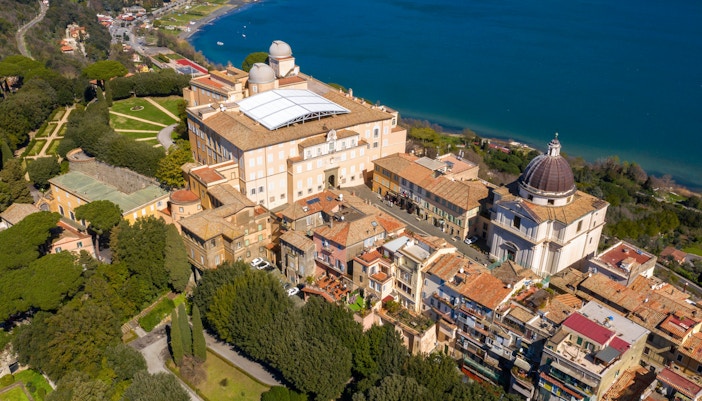
Nachfolgende Päpste erweiterten und verschönerten den Komplex mit neuen Flügeln, Terrassen und den landschaftlich gestalteten Barberini-Gärten. Im Laufe der Zeit wurde es zur offiziellen Sommerresidenz der Päpste, eine elegante Mischung aus barocker Architektur, historischen römischen Fundamenten und einem atemberaubenden Blick auf den Albaner See. Heute ist es eines der schönsten Beispiele des päpstlichen Architekturerbes außerhalb der Vatikanstadt.
Häufig gestellte Fragen über den Apostolischen Palast Castel Gandolfo
Der Name stammt von der Familie Gandolfi, mittelalterlichen Herren, die an dieser Stelle eine Burg errichteten, bevor sie später päpstlicher Besitz wurde. Im Laufe der Zeit entwickelte sich der Name zu Castel Gandolfo, obwohl er manchmal auch als Castel Gondolfo bezeichnet wird.
Nein. Jahrhundertelang blieb es ein privater päpstlicher Rückzugsort, der für Außenstehende unzugänglich war. Erst in den letzten Jahren, unter Papst Franziskus, wurden der Apostolische Palast und die Gärten geöffnet und in ein Museum und ein kulturelles Ziel verwandelt.
Fast jeder Papst von Urban VIII. im 17. Jahrhundert bis zu Benedikt XVI. nutzte den Palast als Sommerresidenz. Papst Franziskus entschied sich, nicht dort zu bleiben, sondern es im Rahmen seiner Initiative, das vatikanische Erbe besser zugänglich zu machen, für Besucher zu öffnen.
Ja. Die Stätte befindet sich auf den Überresten der Villa des Kaisers Domitian, einer weitläufigen römischen Anlage mit Theatern, Kryptoportiken und Gärten. Elemente dieser Ruinen sind heute noch in den Barberini-Gärten zu sehen.
Das gesamte päpstliche Anwesen in Castel Gandolfo ist etwa 55 Hektar groß und umfasst den Palast selbst, die Barberini-Gärten und Teile der antiken Villa des Domitian.
Die meisten Besucher verbringen etwa 2-3 Stunden damit, den Apostolischen Palast und die Barberini-Gärten zu erkunden. Wenn Sie die historische Stadt, ihre Piazza und die Aussicht auf den Albaner See genießen möchten, sollten Sie einen Halbtagesausflug einplanen. Ein ganzer Tag bietet Zeit für einen gemütlichen Spaziergang am See oder eine Mahlzeit.
Architektur des Apostolischen Palastes Castel Gandolfo
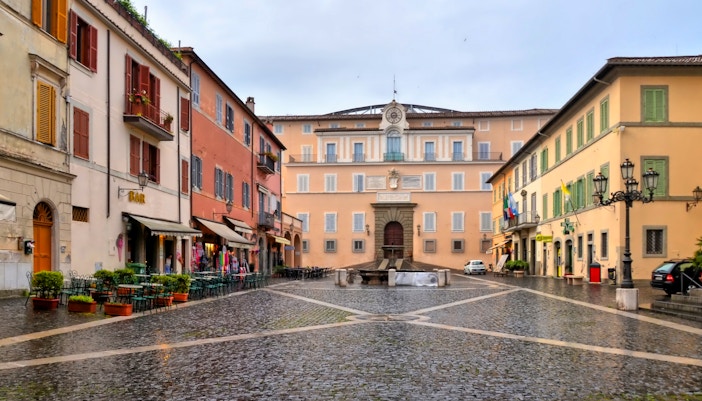
Der Apostolische Palast spiegelt eine anmutige Mischung aus barocker Eleganz und klassischer Ausgewogenheit wider, die maßgeblich von der Vision von Architekten wie Carlo Maderno und Gian Lorenzo Bernini geprägt wurde. Seine würdevolle Fassade, die auf den zentralen Platz der Stadt gerichtet ist, sollte die päpstliche Autorität zum Ausdruck bringen und gleichzeitig eine harmonische Präsenz innerhalb des Dorfes in den Hügeln gewährleisten.
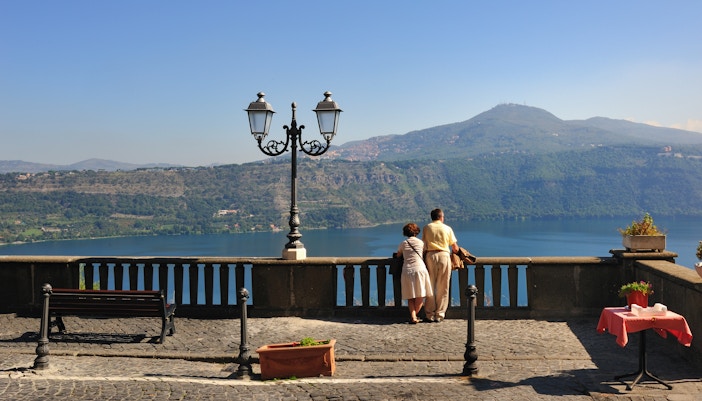
Im Inneren des Palastes finden Sie eine Reihe von reich ausgestatteten päpstlichen Gemächern, prunkvolle Empfangsräume und eine mit raffinierten dekorativen Details geschmückte Privatkapelle, Räume, die einst für Sommerfrische, offizielle Audienzen und Momente der stillen Andacht genutzt wurden. Der architektonische Grundriss erstreckt sich in Richtung der Alban-Hügel, wo sich Terrassen, Loggien und Gartenwege zu einem atemberaubenden Blick auf den Albaner See öffnen. Dieses Zusammenspiel zwischen innerer Pracht und dramatischer Naturkulisse ist ein charakteristisches Merkmal des Palastes und unterstreicht seine Rolle als spiritueller Zufluchtsort und Symbol des päpstlichen Prestiges.
Häufig gestellte Fragen über den Apostolischen Palast Castel Gandolfo
Der Name stammt von der Familie Gandolfi, mittelalterlichen Herren, die an dieser Stelle eine Burg errichteten, bevor sie später päpstlicher Besitz wurde. Im Laufe der Zeit entwickelte sich der Name zu Castel Gandolfo, obwohl er manchmal auch als Castel Gondolfo bezeichnet wird.
Nein. Jahrhundertelang blieb es ein privater päpstlicher Rückzugsort, der für Außenstehende unzugänglich war. Erst in den letzten Jahren, unter Papst Franziskus, wurden der Apostolische Palast und die Gärten geöffnet und in ein Museum und ein kulturelles Ziel verwandelt.
Fast jeder Papst von Urban VIII. im 17. Jahrhundert bis zu Benedikt XVI. nutzte den Palast als Sommerresidenz. Papst Franziskus entschied sich, nicht dort zu bleiben, sondern es im Rahmen seiner Initiative, das vatikanische Erbe besser zugänglich zu machen, für Besucher zu öffnen.
Ja. Die Stätte befindet sich auf den Überresten der Villa des Kaisers Domitian, einer weitläufigen römischen Anlage mit Theatern, Kryptoportiken und Gärten. Elemente dieser Ruinen sind heute noch in den Barberini-Gärten zu sehen.
Das gesamte päpstliche Anwesen in Castel Gandolfo ist etwa 55 Hektar groß und umfasst den Palast selbst, die Barberini-Gärten und Teile der antiken Villa des Domitian.
Die meisten Besucher verbringen etwa 2-3 Stunden damit, den Apostolischen Palast und die Barberini-Gärten zu erkunden. Wenn Sie die historische Stadt, ihre Piazza und die Aussicht auf den Albaner See genießen möchten, sollten Sie einen Halbtagesausflug einplanen. Ein ganzer Tag bietet Zeit für einen gemütlichen Spaziergang am See oder eine Mahlzeit.