Basilica of St. Mary Major - Jubilee 2025 Pilgrimage Guide
Crafted by Headout, a global experiences brand offering curated tours, tickets & experiences. Discover with ease, book with peace.
4.3/5
149,960 travellers from around the world love this
From happy customers
Loved by 50 million+
Trustpilot rating: 4.5 out of 5
E
Eduarda F
BrazilSolo
4/5
2 weeks ago
An incredible experience—a moment I’ll cherish forever. The place is very well-organized and features amazing artwork. I highly recommend it!!
R
Regis M
Couple
5/5
2 weeks ago
Super-fast entry to the Vatican Museums—the organization was top-notch! In just five minutes, we actually skipped right past the entire line of visitors, and we saved at least an hour and a half!
C
Christine J
United StatesFamily
5/5
2 weeks ago
+1 more
I was so happy that I purchased the St. Peter's entry as even though we had to reschedule our time from Saturday to Friday, we were coming from a golf
Cart tour and needed to get some lunch first. The gentlemen in the preordered tickets line told me that as long as I had the tickets, we could go in at whatever time. We got some pizza and then went in a little after our scheduled time. Getting to bypass the huge line of people waiting to get in was a relief as I have a bad knee so it would have been hard to stand for as long as I am sure those people waited!
F
Flavio F
Couple
5/5
3 weeks ago
Visiting the basilica and the Vatican Grottoes was an amazing experience.
Once inside, you’re immediately struck by its majesty and solemnity.
Here, too, thanks to our advance ticket purchase, we avoided waiting in line for several hours.
An experience not to be missed
F
Francesco M
Solo
5/5
Dec 2025
+1 more
I was thrilled I did not know about the fragment of Jesus' cradle I prayed over the relic . In the adoration chapel I said the rosary andhi followed the Mass in the other chapel.
V
Veronica D
United KingdomCouple
5/5
2 days ago
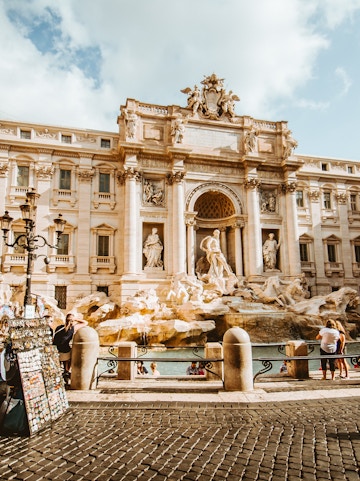
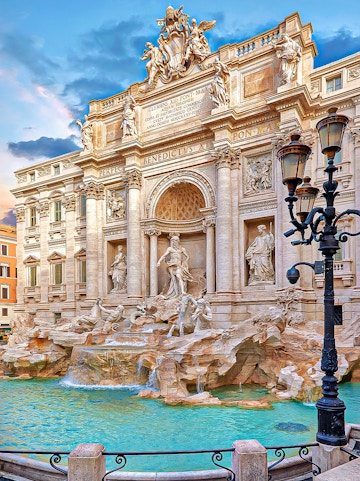
The Trevi Fountain is fabulous. No time on the tour to access the area right next to the fountain for 2 euros, so we went back again the next day. Mary was a lovely, knowledgeable tour guide. Definitely recommend this tour to explore Rome.
S
Sabine K
GermanySolo
4/5
Dec 2025
Everything worked well
If you want to visit St. Peter's Basilica during the day without long queues, you should get a ticket for fast track entry, the queue at the free entrance for the security checks was very long.
Basilica of St. Mary Major as a major pilgrimage site in Rome
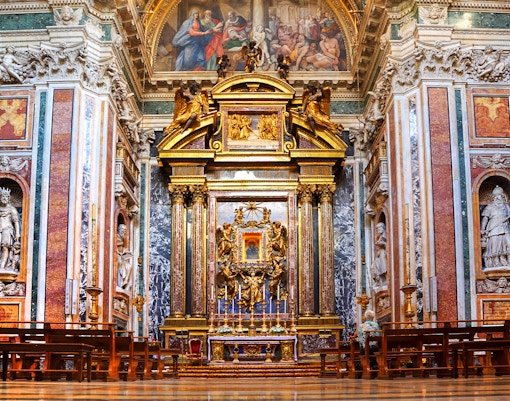
The Basilica of St. Mary Major is one of Rome's four Papal Basilicas and a popular pilgrimage destination for Catholics. It is the largest and oldest Marian shrine in the Western world, dedicated to the Blessed Mary. The Basilica houses precious Marian relics, including a piece of holy manger where Jesus was laid, venerated under the High Altar and the iconic "Salus Populi Romani" painting. Its Baroque architecture, complemented by Marian mosaics, and its Papal recognition make it a significant destination for pilgrims seeking spiritual fulfillment, as well as for those interested in history, art, and architecture.
Things to know before you book your Basilica of Santa Maria Maggiore tickets
Access to Basilica di Santa Maria Maggiore is free, but certain areas—like the dome, museum, and archaeological sites—require a ticket. Your ticket includes an audio guide (Italian, English, Spanish, French, German) with rich insights into the basilica’s history and art, letting you explore at your own pace.
Expert-led tours take you beyond the main basilica, giving you an in-depth look at the Treasury Room and underground archaeological area, which are not accessible to general visitors.
During Jubilee years, pilgrims must register online and obtain a free pilgrim's card to attend special masses and events.
Significance of Basilica of St. Mary Major during Jubilee 2025
The Jubilee 2025 is a moment of spiritual renewal, drawing millions of pilgrims to Rome in search of indulgences, forgiveness, and divine grace. As the oldest Marian basilica in the Western world, St. Mary Major holds a special place in this sacred journey. Here’s why it is a must-visit during the Jubilee:
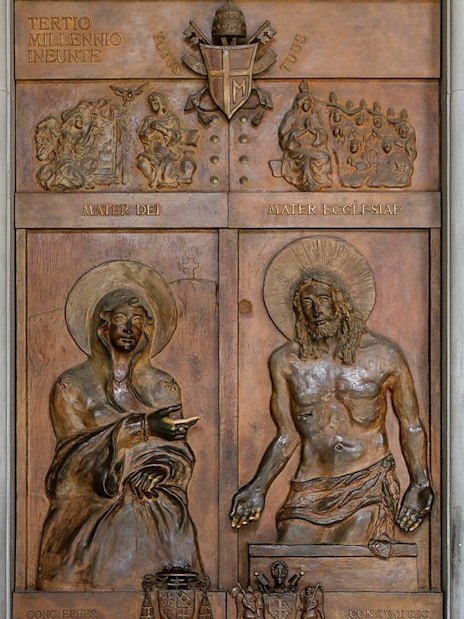
Holy door & pilgrimage route
The Holy Door of St. Mary Major, opened only during Jubilee years, represents a passage into divine grace. Walking through it is a powerful act of faith and devotion.
The basilica is one of Rome’s Seven Pilgrimage Churches, making it an essential stop for those completing the traditional pilgrimage route.
Pilgrims believe that stepping through the Holy Door with true repentance allows them to receive a Jubilee indulgence—a remission of sins.
To obtain the indulgence, pilgrims must: ✔ Pass through the Holy Door of St. Mary Major. ✔ Attend Mass or spend time in prayer inside the basilica. ✔ Confess their sins and receive the Sacrament of Reconciliation. ✔ Pray for the Pope’s intentions (Our Father, Hail Mary, and the Creed). ✔ Perform an act of charity or reflect on spiritual teachings.
*A Jubilee indulgence is a special grace that removes the spiritual consequences of past sins, granted to pilgrims who follow certain acts of faith, such as passing through a Holy Door, confessing, praying, and performing good deeds.
Special Jubilee Masses & Marian celebrations
As the most important Marian shrine in Rome, St. Mary Major will host:
Daily and special Jubilee Masses dedicated to the Virgin Mary.
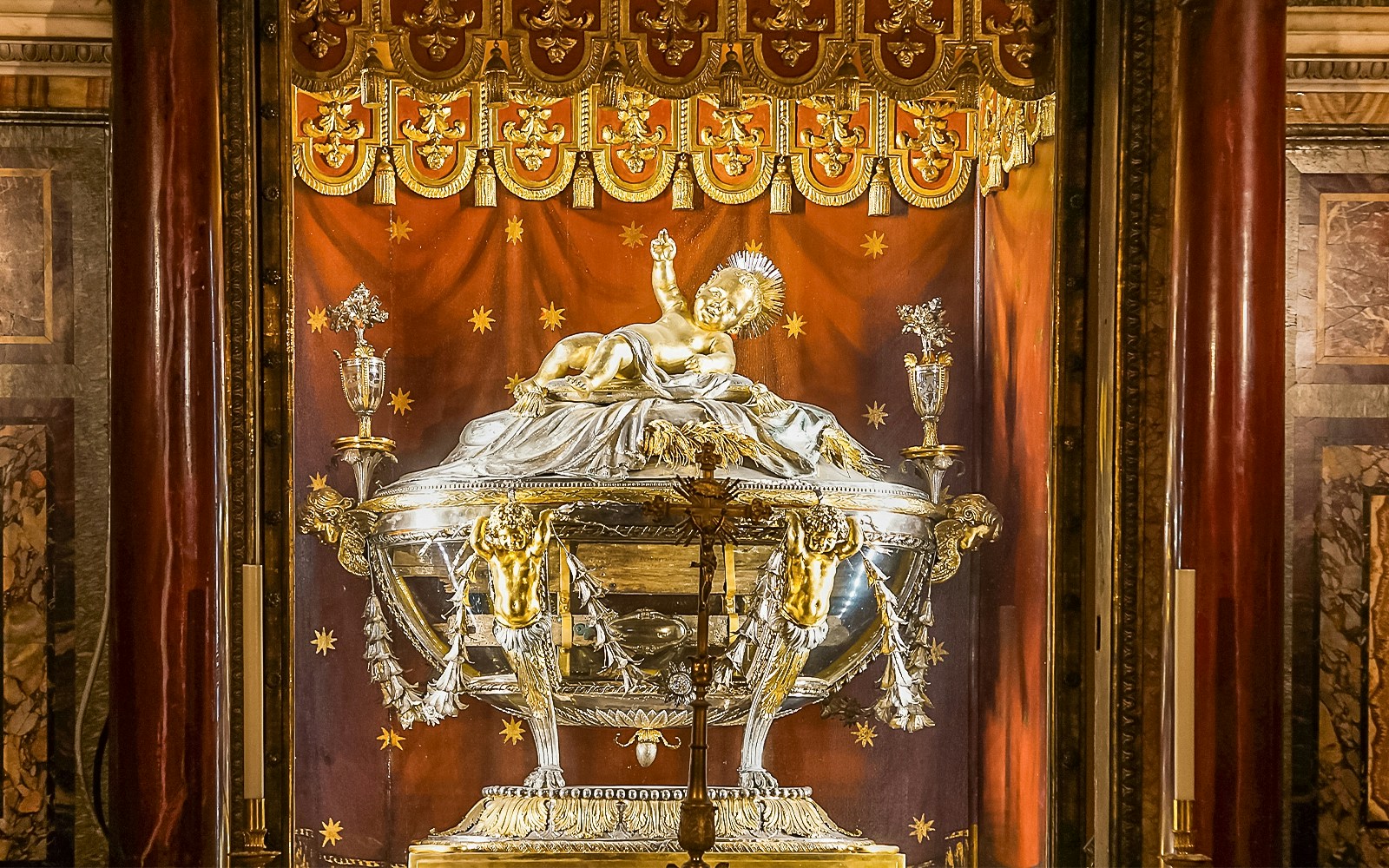
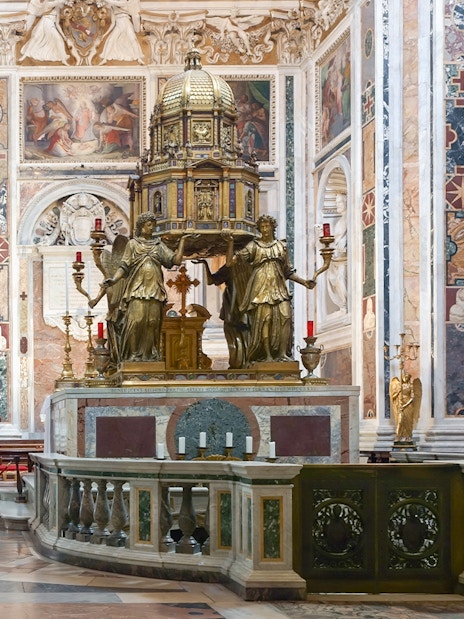
Veneration of the Holy Manger relic, believed to be part of the crib where Jesus was laid.
Prayer services and spiritual teachings, deepening devotion to Mary.
💡 Tip: Major Marian feast days and Jubilee events will draw large crowds—arrive early to secure a good spot!
Papal visits & major events
As a Papal Basilica, St. Mary Major has historically hosted Papal ceremonies during Jubilee years. Highlights include:
Opening of the Holy Door by Pope Francis, marking the beginning of the Jubilee.
Marian processions and Papal blessings held at the basilica.
Pilgrimage gatherings, where the faithful come together in devotion.
💡 Plan ahead: The Jubilee will bring millions of visitors to Rome—book guided tours and accommodations early to enhance your experience!
Museum & chapels inside the Basilica of St. Mary Major
Liberian Historical Museum
Inaugurated in 2001 by Pope John Paul II, the museum houses the Treasury of the Basilica. Highlights include famous paintings like Salita al Calvario and Madonna con Bambino e Santi, ancient musical scores of the Venerable Liberian Musical Chapel, and precious liturgical objects. There’s a dedicated section dedicated to the history of devotion to the Salus Populi Romani.
Hall of Popes
This grand space reflects Pope Paul V's architectural vision. Built by Flaminio Ponzio, it is a commemorative space for significant figures associated with the basilica, including Cardinals, Archpriest Saint Charles Borromeo, Popes, and the Spanish royal family.
Archaeological Area
Explore ancient Roman ruins beneath the church, including imperial-era rooms, a mosaic-adorned thermal bath, and rare frescoes depicting an agricultural calendar.
Sistine Chapel
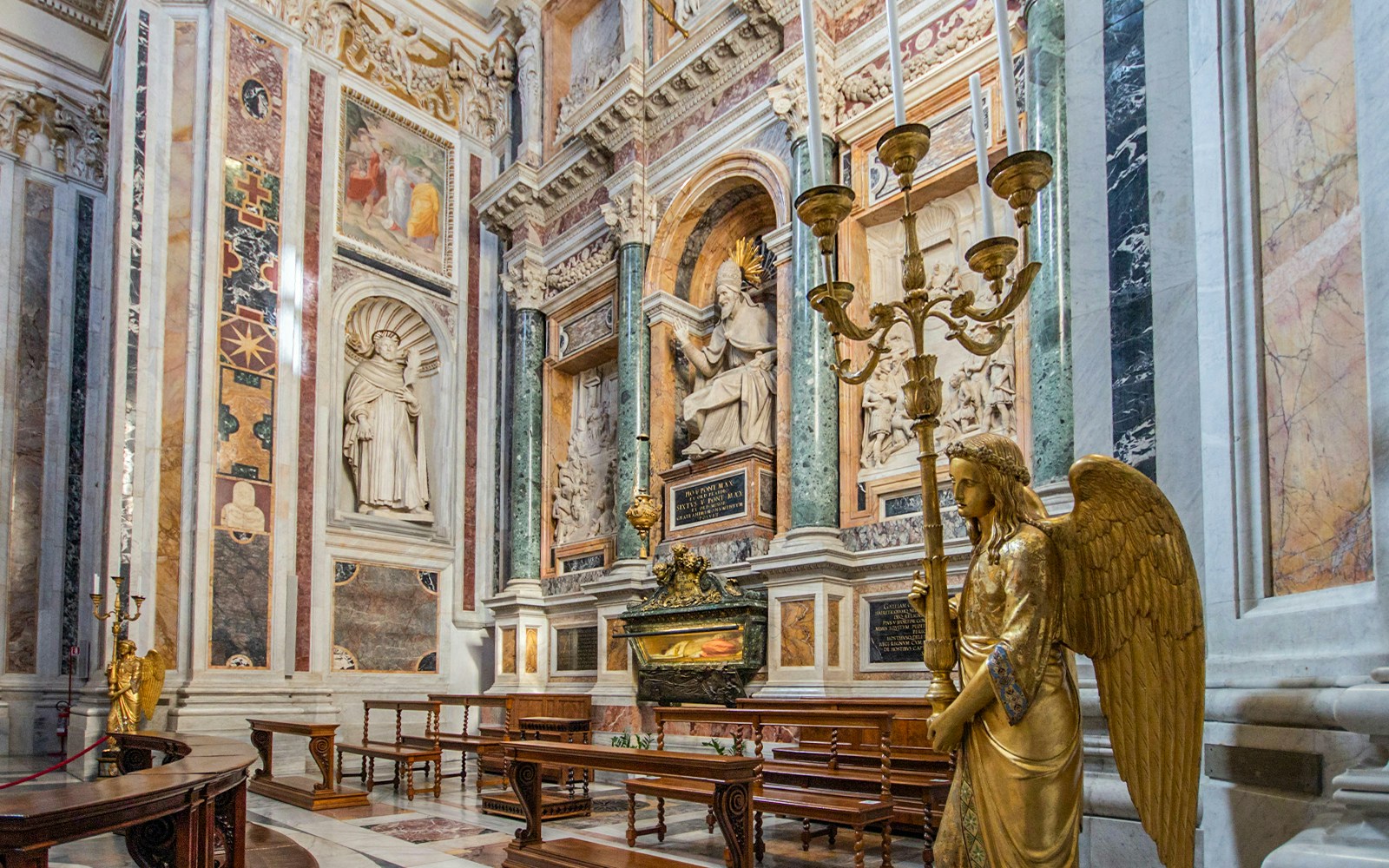
Not to be confused with the one in the Vatican, this chapel was built by Pope Sixtus V. It contains his tomb and originally housed the Holy Manger by Arnolfo di Cambio.
Paolina Chapel (also called Borghese Chapel)
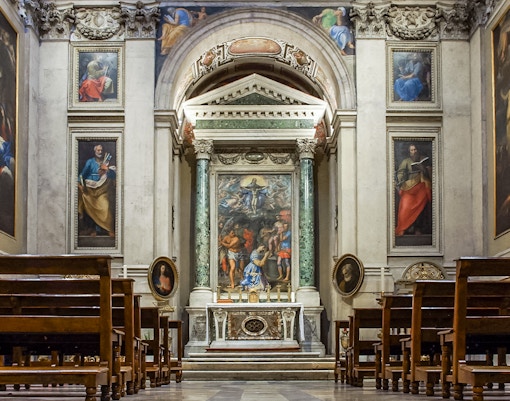
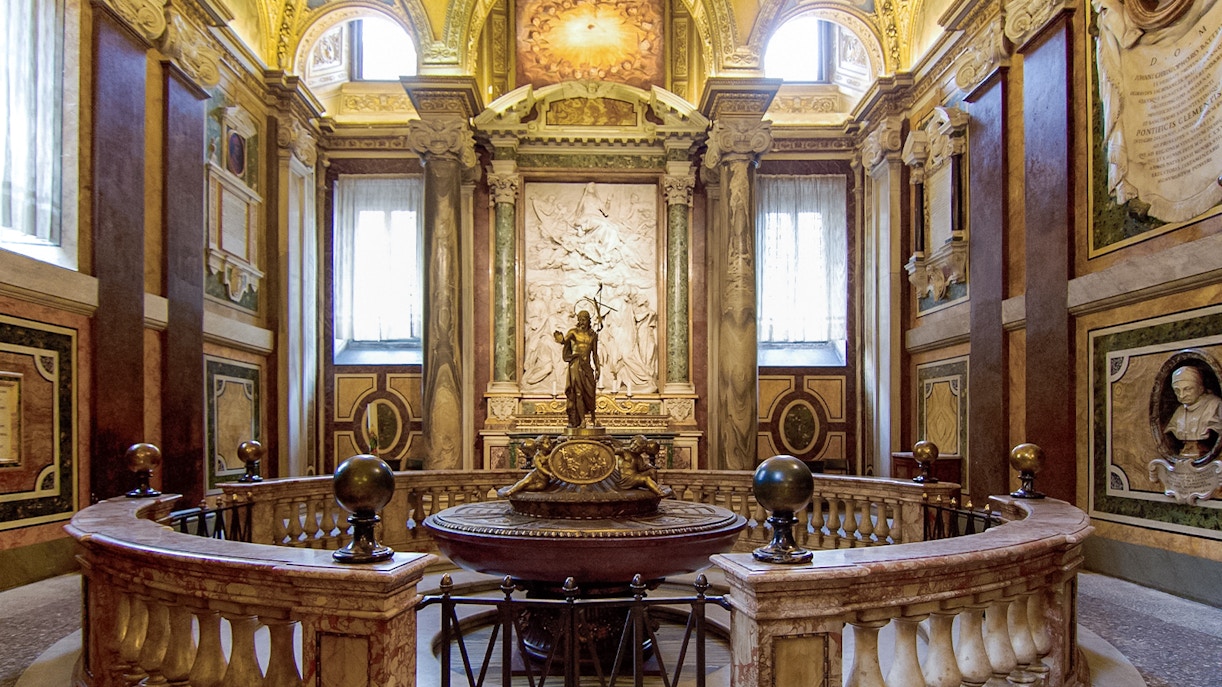
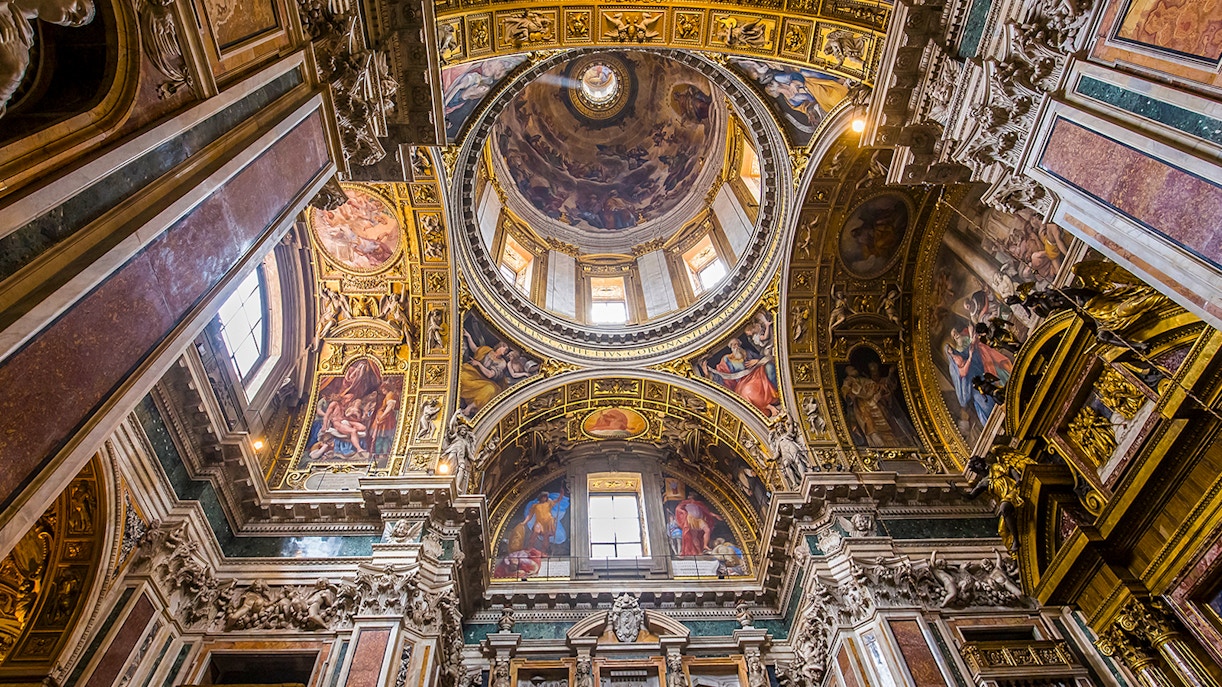
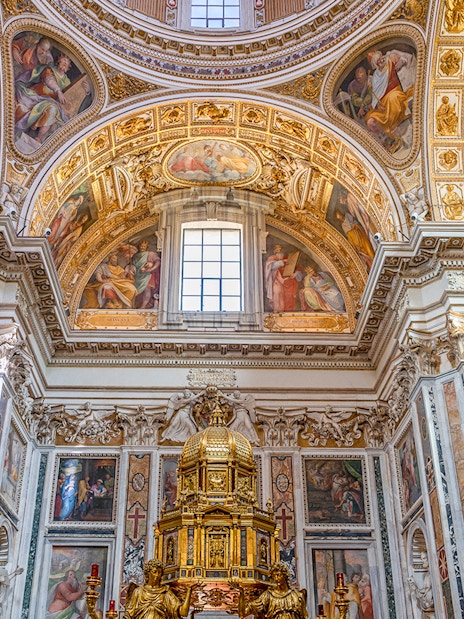
Named after Pope Paul V, this chapel features works by several masters, including Cavalier d'Arpino, Baglione, Guido Reni, and Bernini's father. It also contains the tombs of Pope Clement VIII and Pope Paul V, as well as the image of the "Salus Populi Romani" (Protectress and Health of the Roman People).
Sforza Chapel
Dedicated to Saint Flora and Saint Lucilla, it was originally assigned to Michelangelo, and ultimately realized by Tiberio Calcagni who modified some details. It also has an altar-piece by Gerolamo Siciolante representing the assumption of the Virgin Mary.
Chapel of Saint Michael Archangel
Originally a Gothic chapel dedicated to Saints Michael Archangel and Peter in Chains, it was restored by Ferdinando Fuga for the Holy Year of 1750. Cardinal Archpriest d’Estouteville commissioned Piero della Francesca for the ceiling frescoes of the four Evangelists, which are of significant historical and artistic value.
Cesi Chapel
Dedicated to Saint Catherine of Alexandria, commissioned by Cardinal Federico Cesi around 1550. It features bronze tombs of Cardinals Paul and Federico Cesi by Guglielmo della Porta and Girolamo da Sermoneta's altarpiece depicting Saint Catherine's martyrdom.
Chapel of the Crucifix
This chapel is a relatively recent addition, rebuilt by architect Fuga in 1750. It is decorated with porphyry columns and entirely covered in marble. It contains precious reliquaries and a wooden crucifix from the early 1400s.
Highlights of the St. Mary Major Basilica
1/11
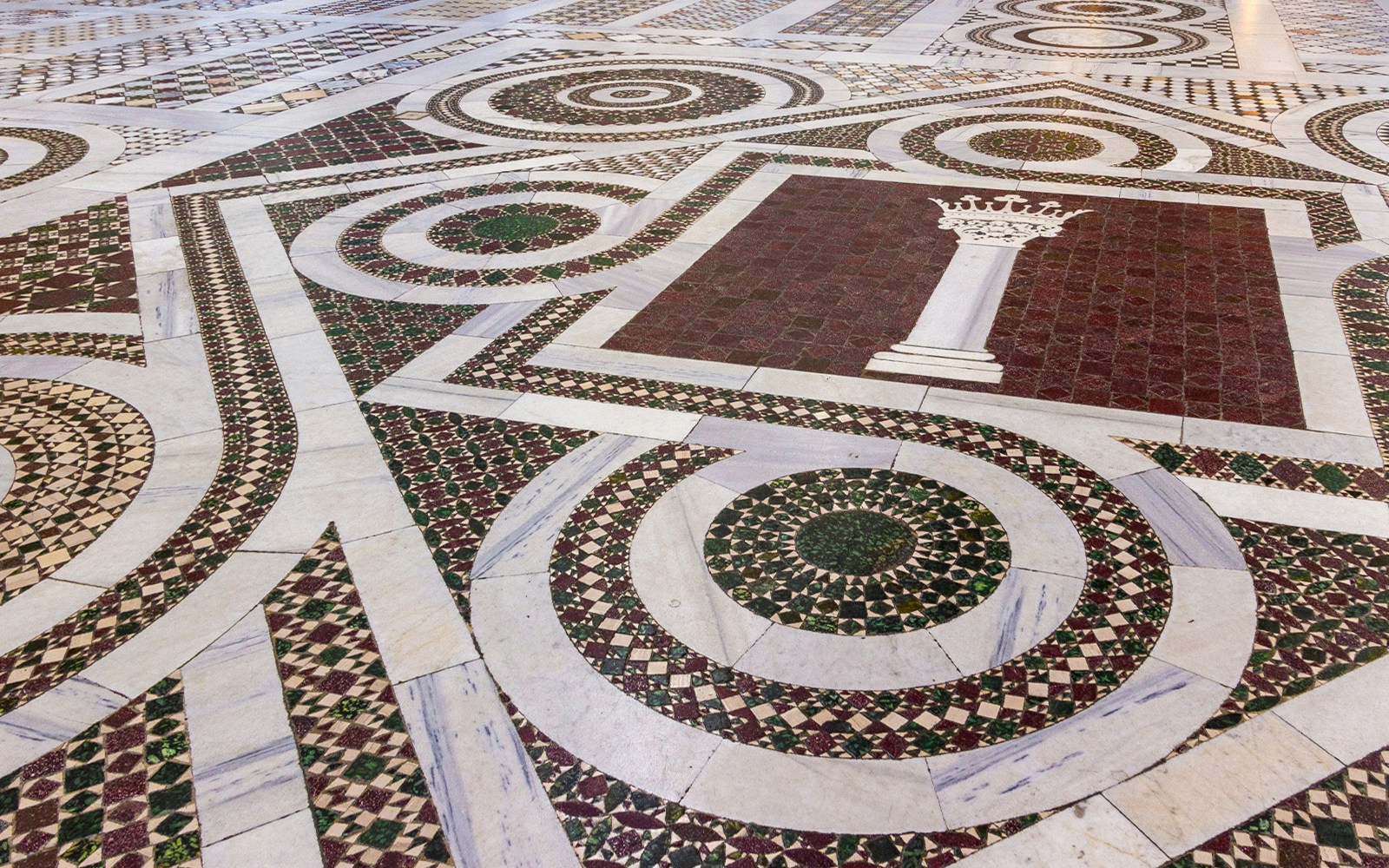
Cosmatesque Floor
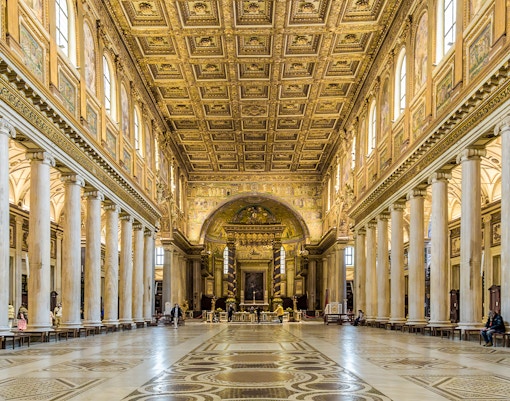
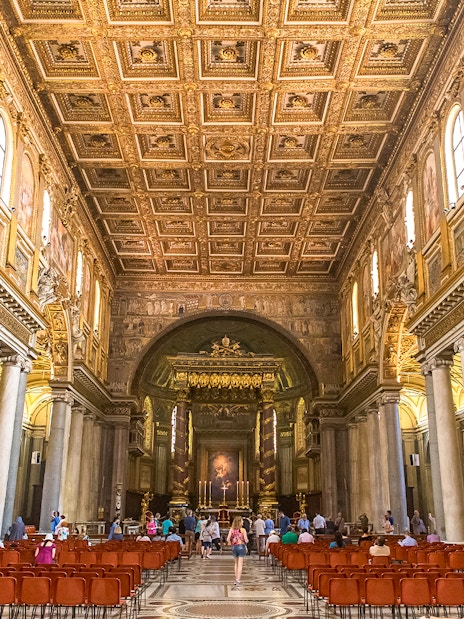
This is a mosaic floor that dates back to the 13th century. It is known for its intricate and decorative patterns, characteristic of the Cosmatesque style, which was popular in medieval Italy.
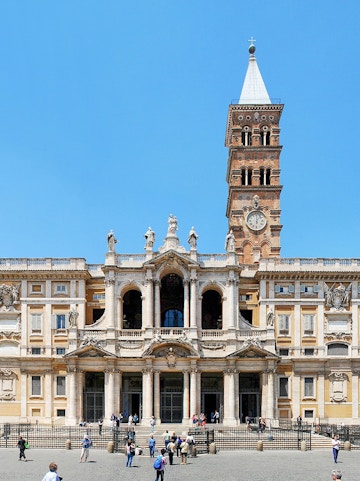
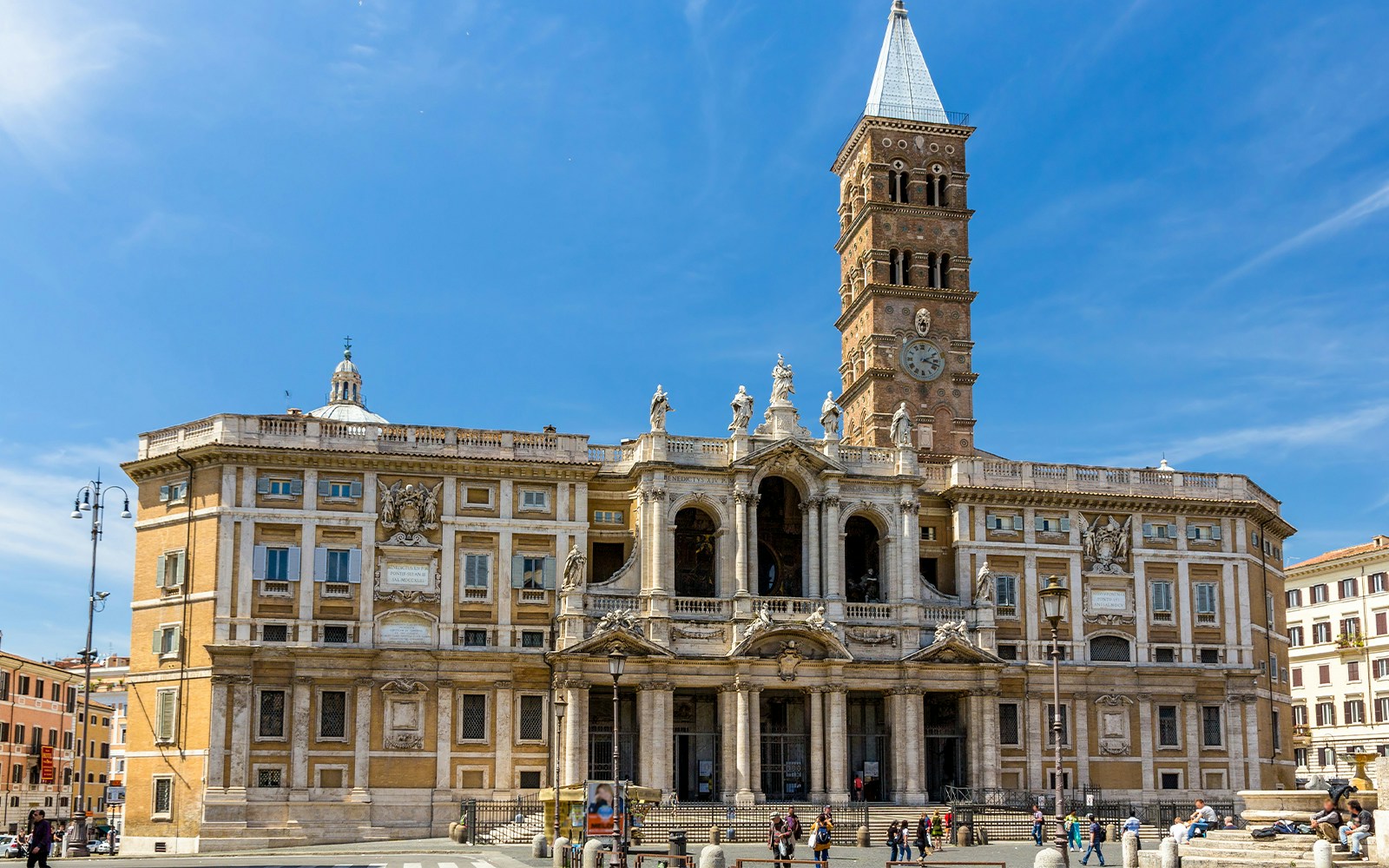
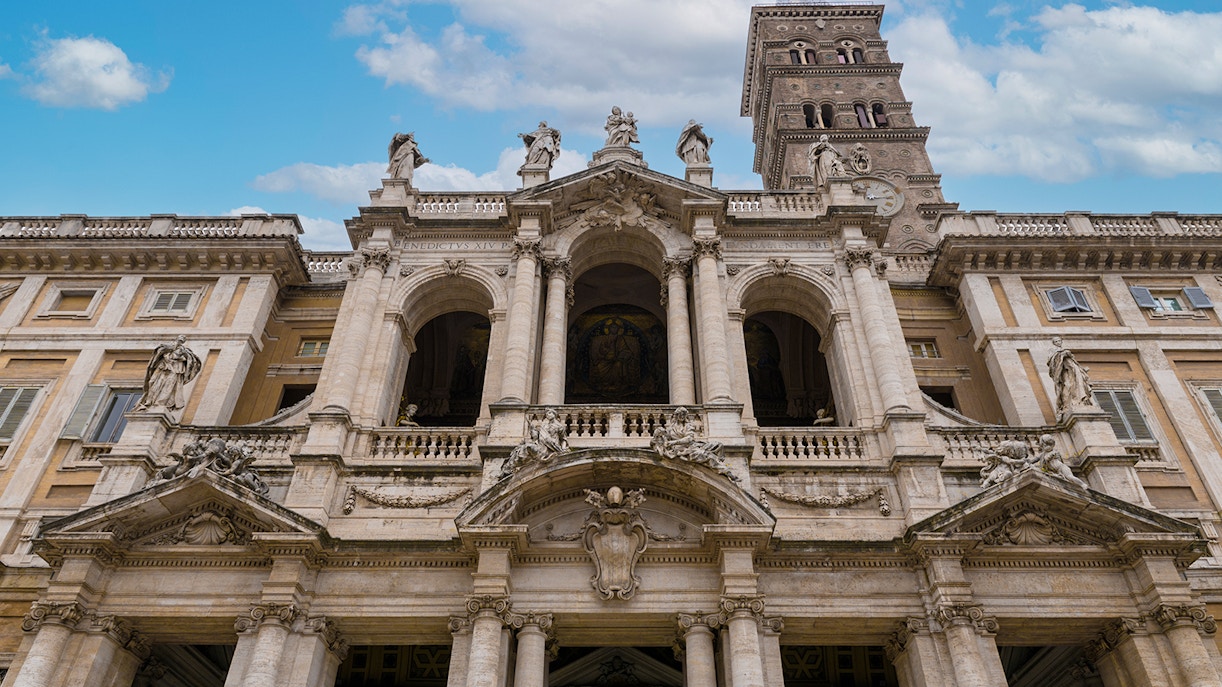
Facade
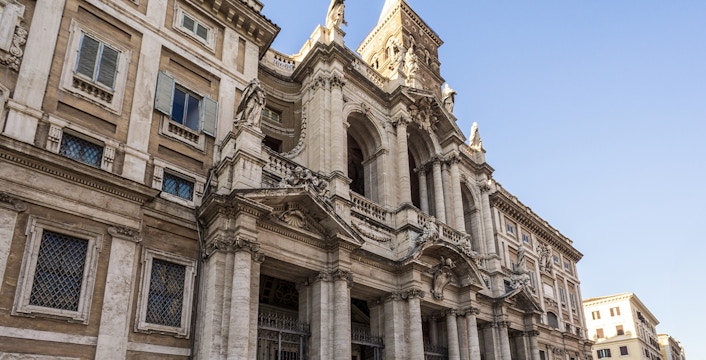
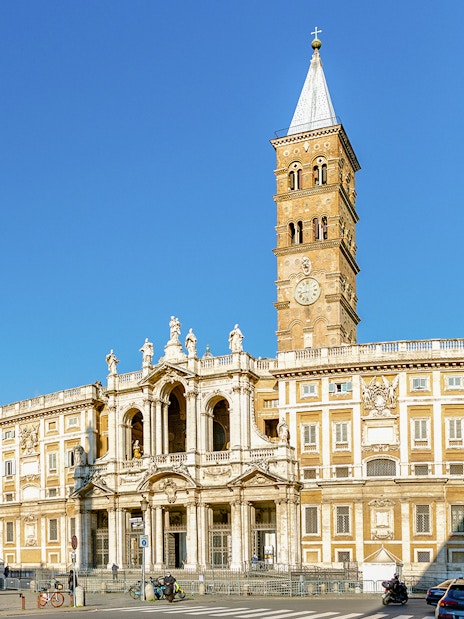
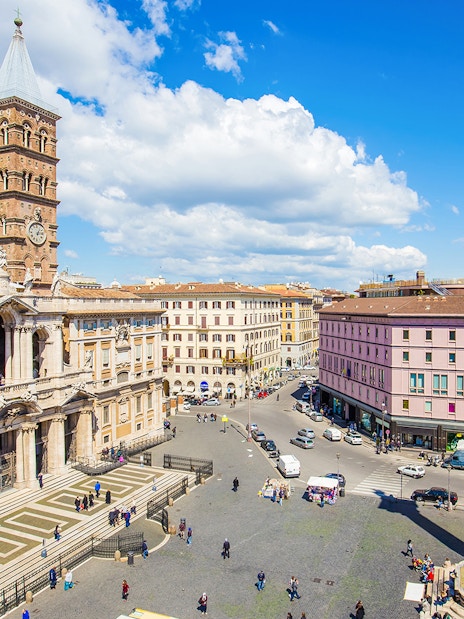
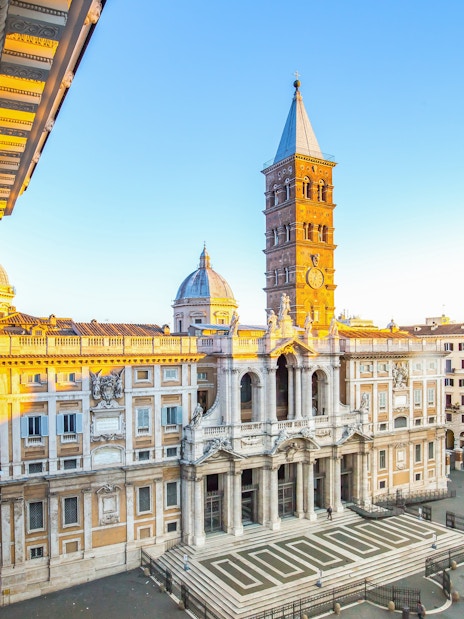
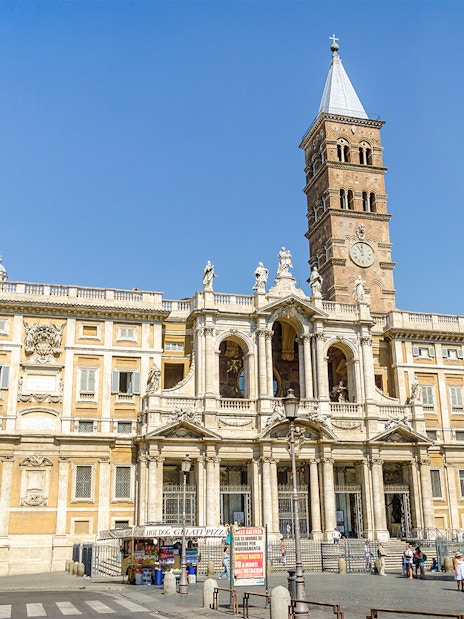
The façade of St. Mary Major is a grand and ornate structure designed by Fernando Fuga. It has five entrances and a balcony for papal blessings.
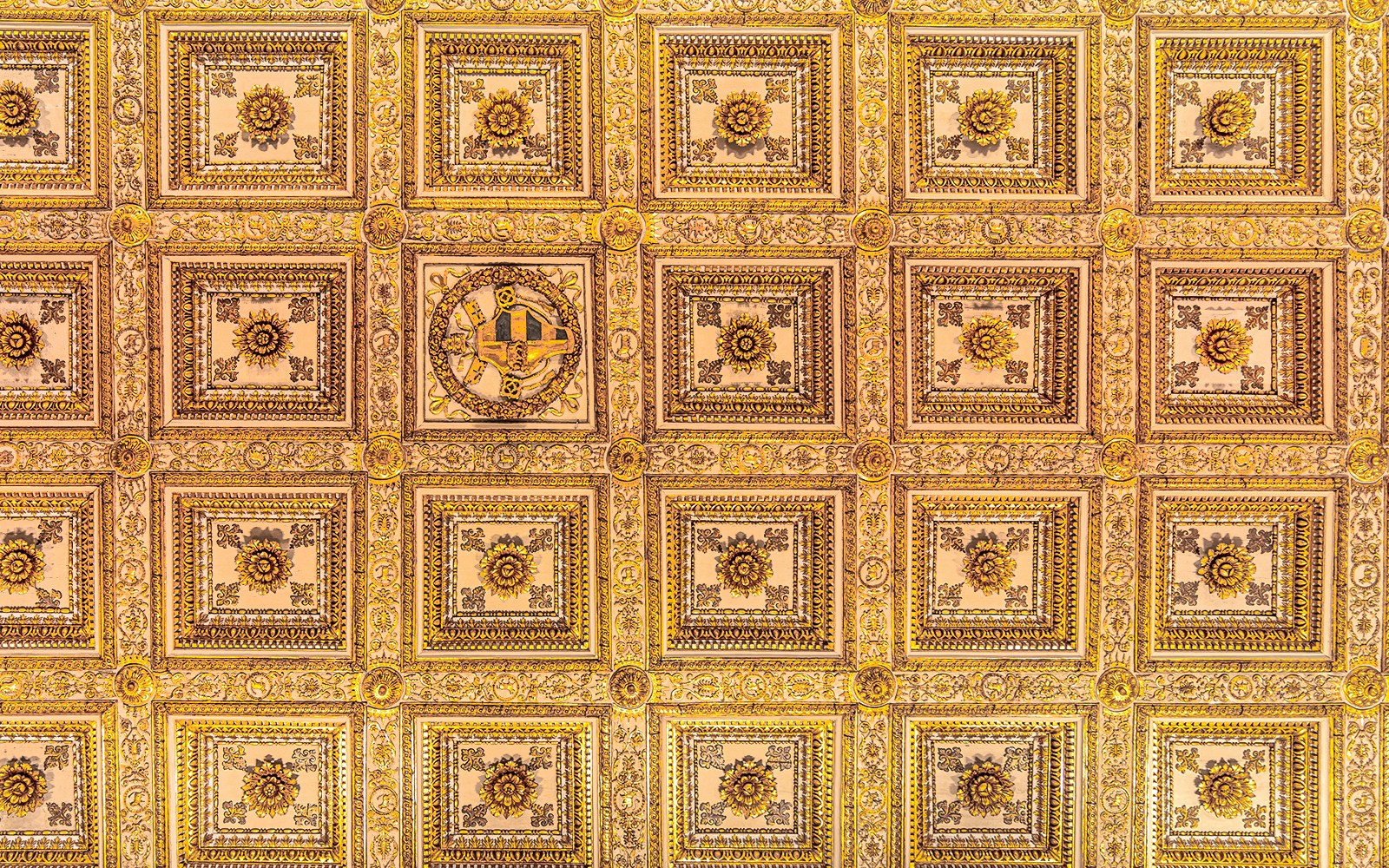
Coffered Ceiling
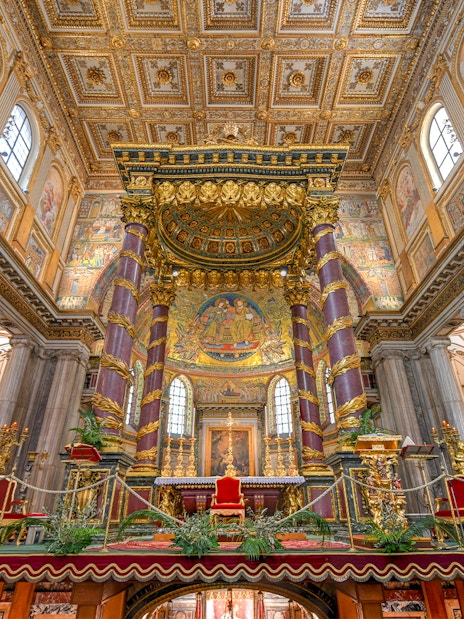
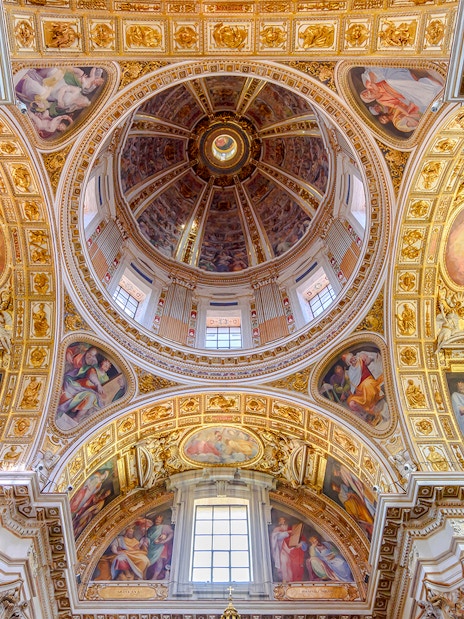
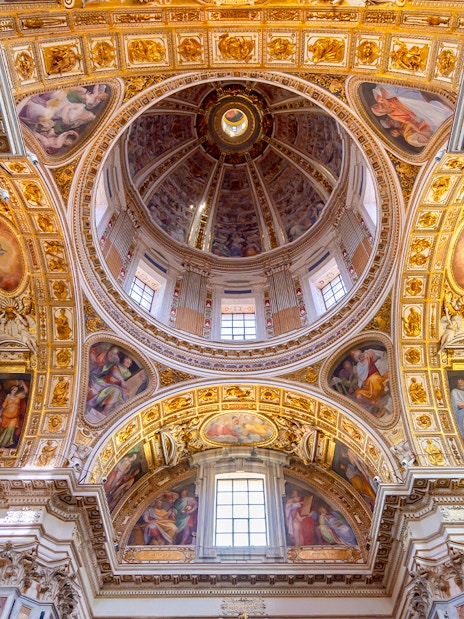
The coffered ceiling, designed by Giuliano da Sangallo in the 16th century, is said to be gilded with gold brought from the Americas by Christopher Columbus and presented to Pope Alexander VI by the Spanish king.
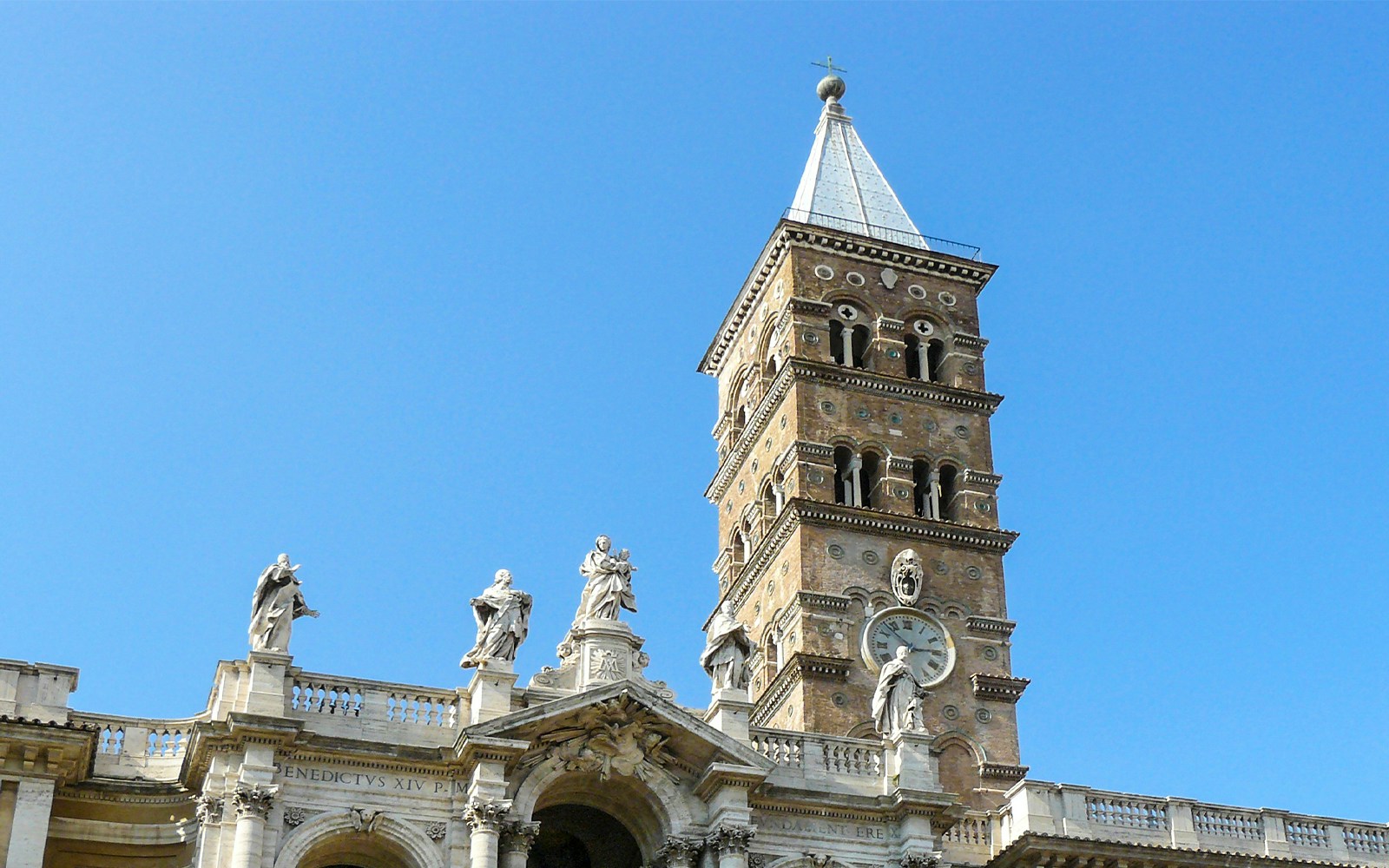
Bell Tower
The bell tower of St. Mary Major is the highest in Rome, standing at 240 feet. It is a prominent feature of the basilica's exterior and is also a popular landmark in the city.
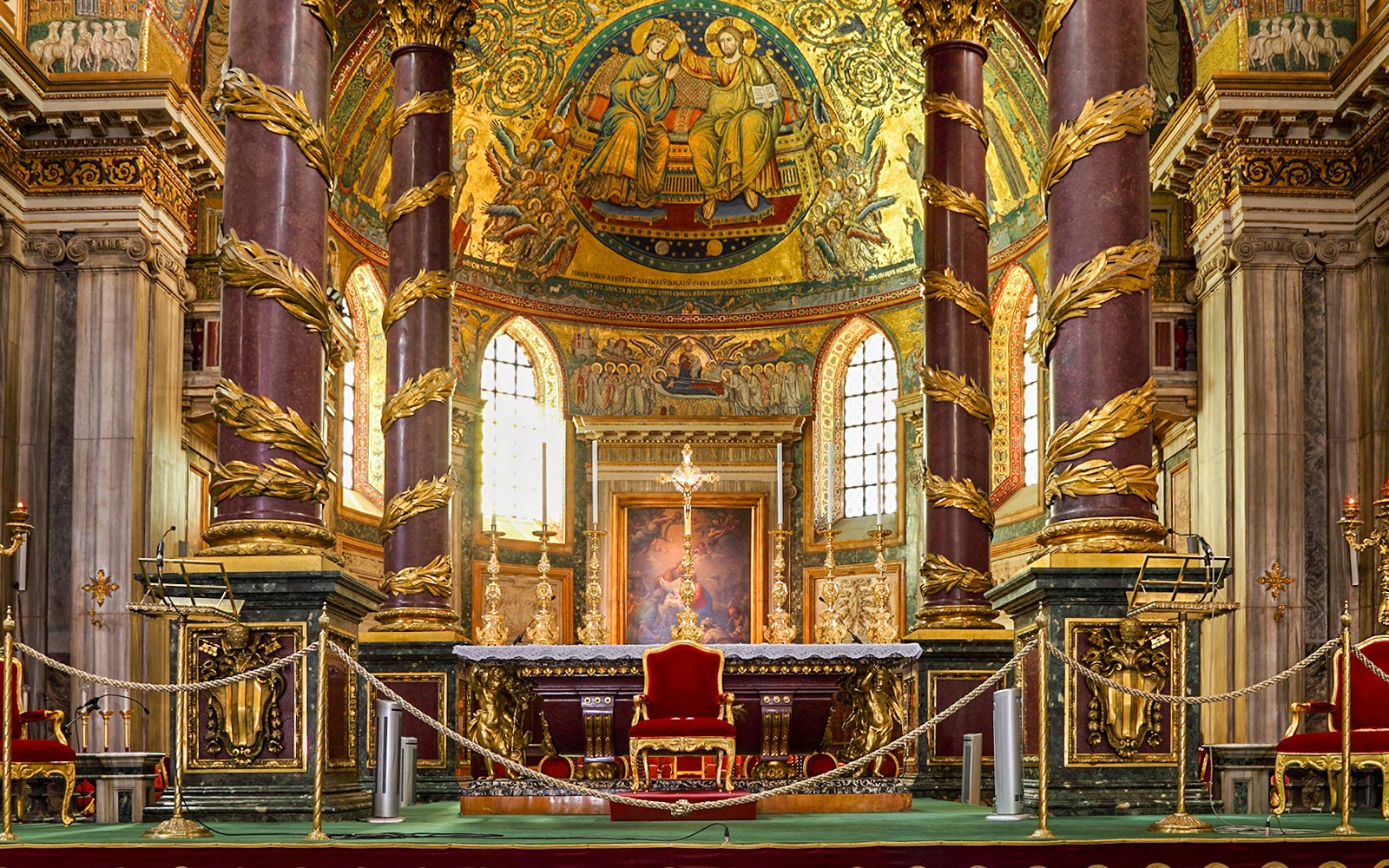
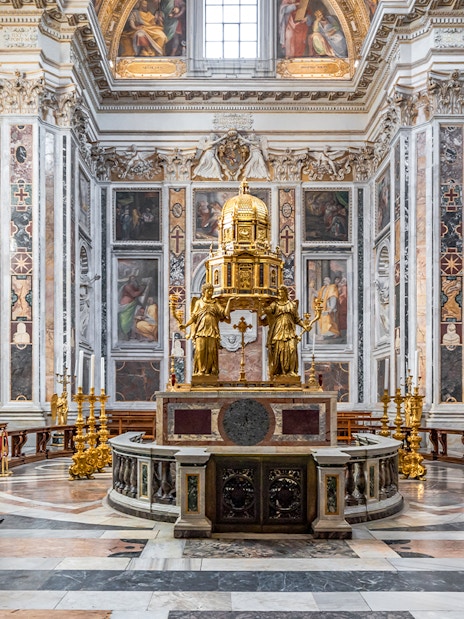
High Altar
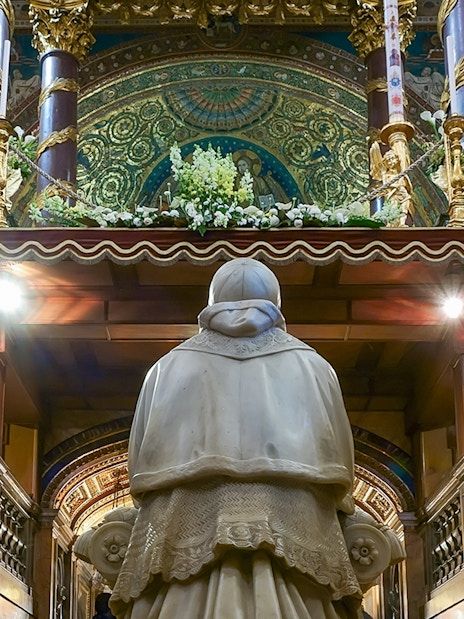
The High Altar is located at the apse of the basilica, where devotees come together for worship and ceremonies. The highlights include ornate decorations and a baldachin, a canopy supported by columns.
Holy Crib
A revered relic believed to be a fragment of the manger where Jesus was born, it's housed in a crystal shrine in the Crypt of the Nativity.
Loggia
The loggia is a balcony or porch at the main entrance of the basilica. It is used for papal blessings and other ceremonies.
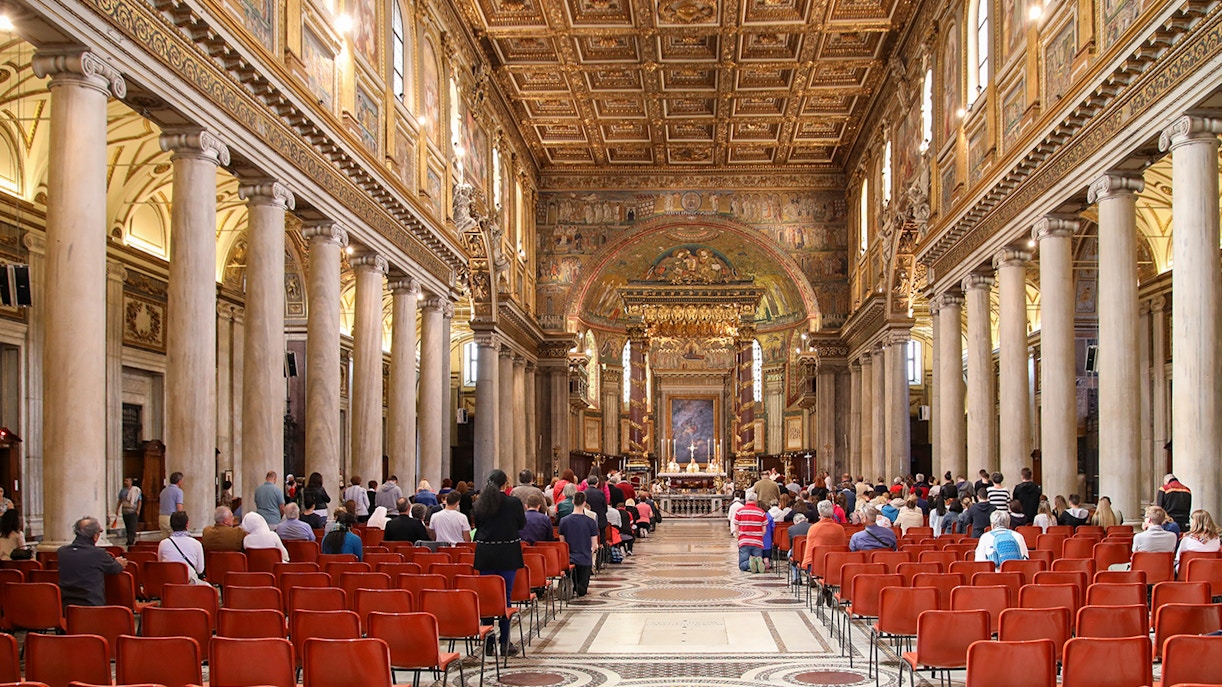
Nave & Mosaics
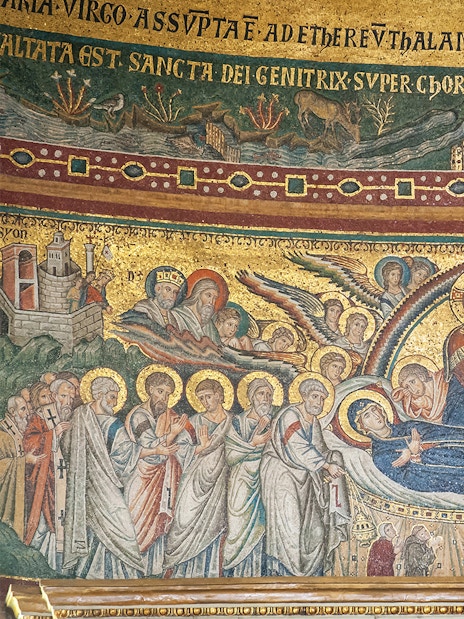
The nave of St. Mary Major is a central aisle that runs the length of the church. It is divided into aisles by columns and is adorned with mosaics from the early fifth century. These mosaics depict scenes from the Old Testament and are some of the oldest Christian mosaics in Rome.
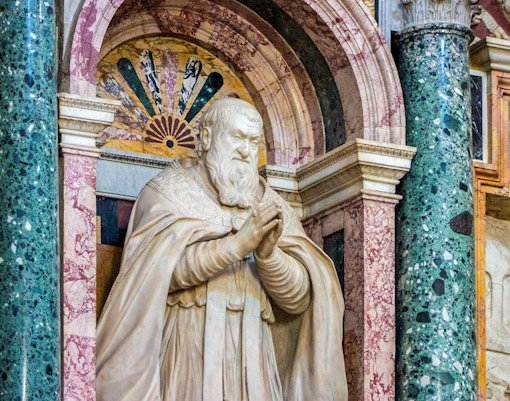
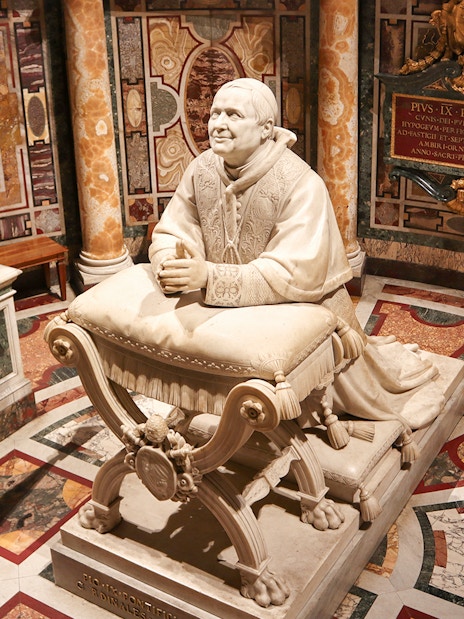
Tombs of Popes
The basilica is the final resting place for several popes, including Pope Pius V and Pope Sixtus V. The tombs speak to basilica's spiritual and cultural importance.
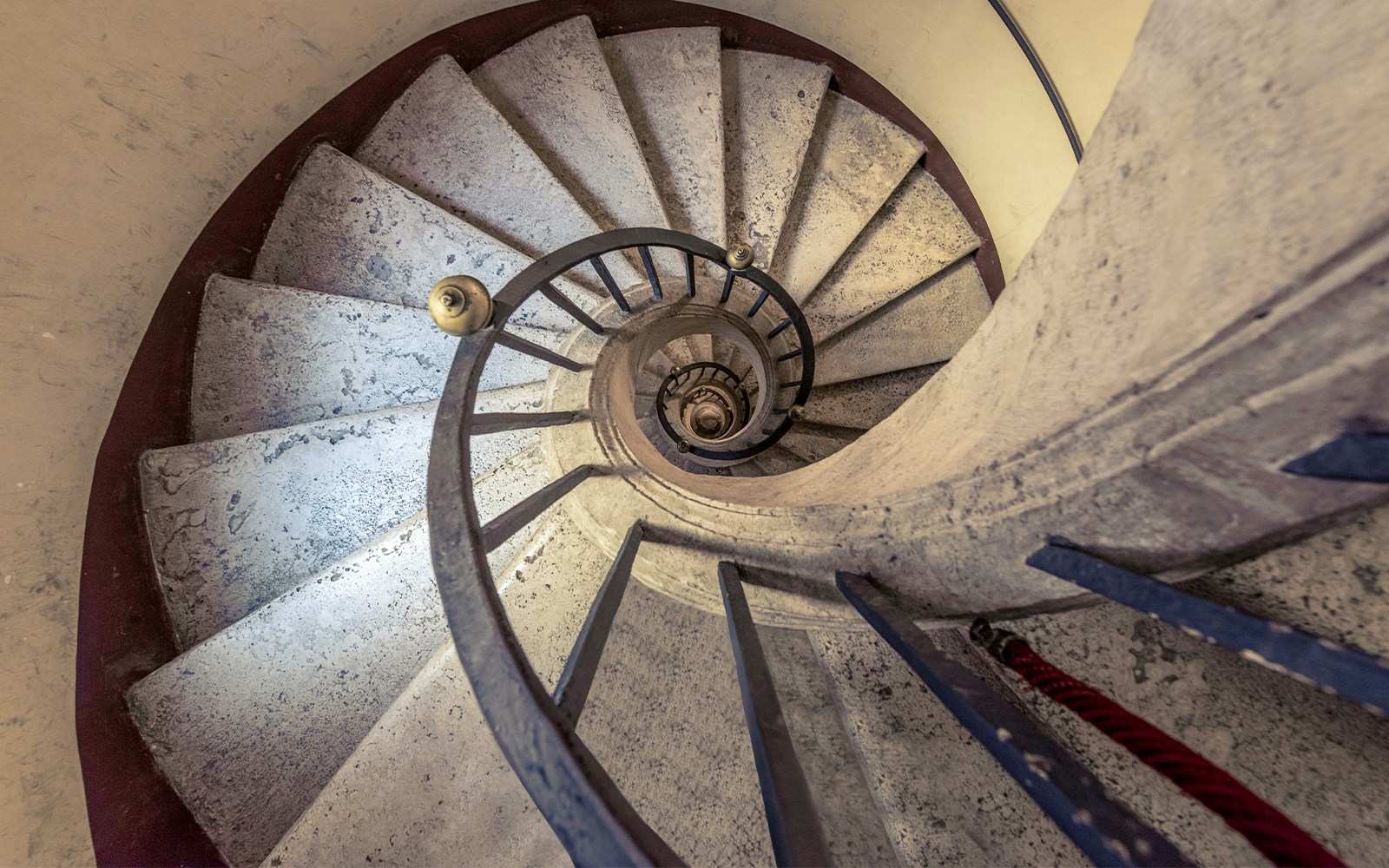
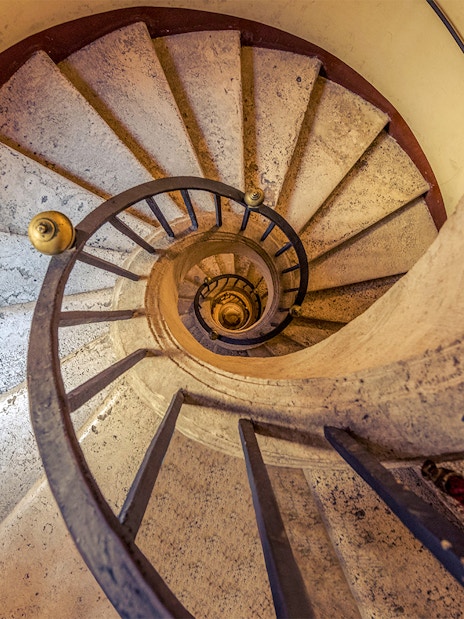
Bernini’s Staircase
Bernini’s Staircase is a grand and elegant staircase designed by Bernini himself. It is a masterpiece of Baroque architecture and takes you to the upper levels of the basilica.
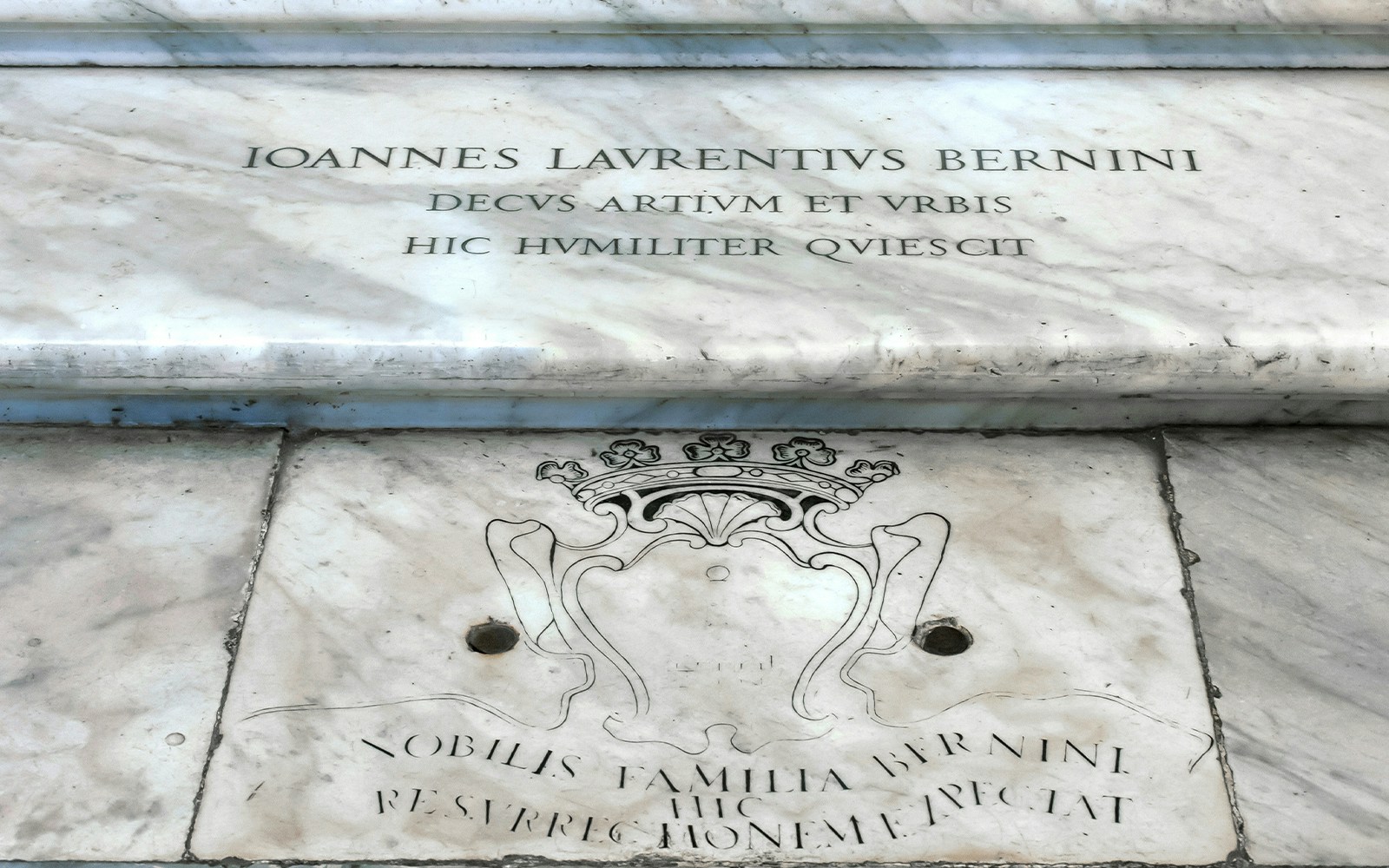
Bernini’s Tomb
Bernini’s Tomb honors the great Italian sculptor and architect Gian Lorenzo Bernini. He was a prominent figure in the Catholic Church and designed many of the basilica's decorations, including the baldachin over the High Altar.
Legend of "Miracle of the Snow"
The legend surrounding the basilica's foundation involves a childless Roman couple in the 4th century who vowed to build a church dedicated to Mary if they were blessed with a child. They dreamt of the Virgin Mary indicating a specific location for the church.
Miraculously, on the sweltering morning of August 5, snow blanketed the Esquiline Hill. Pope Liberius marked the outline of the future basilica in the snow, leading to the construction of St. Mary Major. This event is commemorated annually on August 5th with a flower petal "snowfall" inside the basilica.
Plan your visit to Basilica of St. Mary Major
St. Mary Major Basilica opening hours: 7am - 7pm with last admission at 6:30pm
Polo Museale is open from: 9:30am to 6pm, with the last admission at 5:30pm.
On the Solemnity of Mary the Mother of God, January 1, 2025, Pope Francis will open the Holy Door of the Basilica of St. Mary Major and will be closed on December 28, 2025.
Best time to visit
The best time to visit St. Mary Major Basilica is during the spring (April to May) and fall (September to October) when the weather is pleasant and crowds are smaller. Early mornings or late afternoons are ideal for a serene experience and fewer visitors. During the Jubilee Year, expect larger crowds, especially around the Holy Door. Book in advance for guided tours and accommodations.
Daily Masses are held at various times throughout the day.
Sunday Masses usually have a larger attendance, with special liturgical celebrations. There are also special liturgical events, particularly during Marian feasts.
Visitors are expected to dress modestly as a sign of respect when entering the basilica. This typically means covering shoulders and knees.
Address: P.za di Santa Maria Maggiore, 00100 Roma RM, Italy
By metro: Take a line Metro A to the Termini Station, from there it’s a short 550 meters walk via Via Giolitti and Via Gioberti. From Cavour Station (Line B), it’s a walk 750 meters.
By bus: You can take lines 105, 150F, 590, 71, 714, C3, 360, 649, NMA, 5, N5, N11, 14. Lines 70, 81, 85, 87, and 492 stop near the basilica. Closest stop is Carlo Alberto, 46 meters away.
By tram: Tram Line 3 and get off at the Vittorio Emanuele stop, which is 300 meters away.
Shoulders must be covered for both men and women. Shorts, skirts, and dresses should be at or below the knee. Sleeveless tops and tank tops are not permitted. Hats should be removed when you enter the basilica.
Photography and filming are allowed inside the basilica for personal use only. No flash photography is permitted. Tripods are not allowed.
Visitors are expected to maintain silence and decorum inside the basilica
No eating, drinking, or chewing gum is allowed
Pets are not allowed inside the basilica, except for service animals.
Visitors under the influence of alcohol or drugs will be denied entry.
Find a quiet corner within the basilica to meditate or simply absorb the ambiance. The chapel of St. Michael Archangel can be a peaceful retreat.
Go early in the morning or late afternoon to avoid crowds and long lines. Allow at least 1-2 hours to explore the basilica and its highlights.
If visiting during a Holy Year, pass through the Holy Door to earn a plenary indulgence. It represents a path from sin to salvation and the ultimate spiritual renewal.
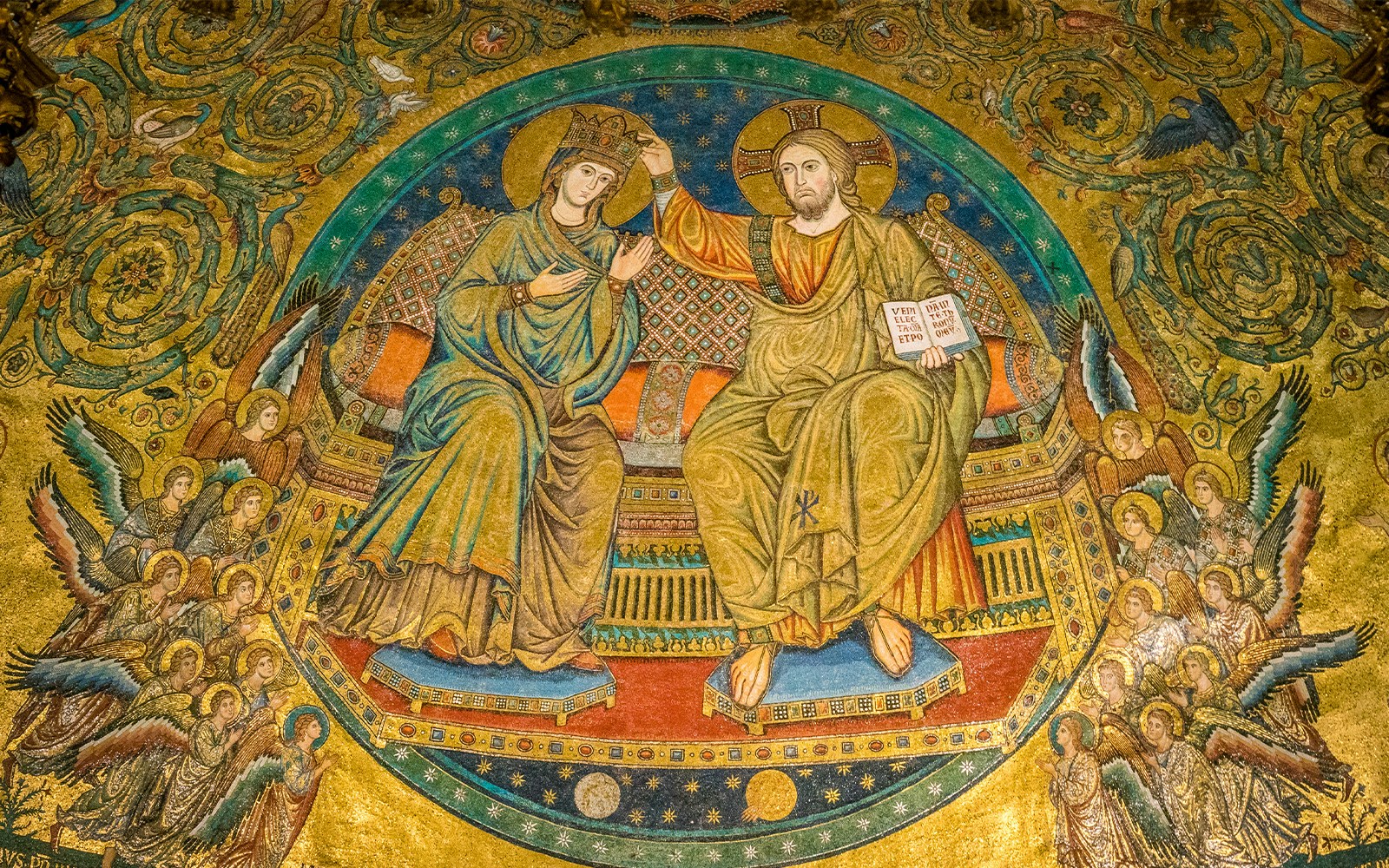
If visiting in August, try planning around August 5 to attend the Miracle of the Snows celebration and see the white petals falling from the coffered ceiling. Even if you can’t make it then, don’t miss the cycle of the V-century mosaics depicting biblical stories related to Abraham, Jacob, Moses, Joshua and life of Jesus, in the middle aisle and triumphal arch.
Take a short 10-minute walk to see Michelangelo’s Moses at San Pietro in Vincoli.
Follow the dress code (covered shoulders and knees) to ensure entry.
Try Panificio Roscioni for a quick snack or L’Asino D’Oro for a delicious sit-down meal in Rione Monti.
Follow the Rome Jubilee itinerary to hit multiple holy spots in one day.
Bring a scarf or light jacket to cover up when needed, especially in the summer.
Brief history of the Basilica of St. Mary Major
4th Century: Legend suggests the basilica's origins in a miraculous snowfall marking its construction site.
422-432: Construction begins under Pope Celestine I.
434: Pope Sixtus III consecrates the basilica on August 5th, dedicating it to the Virgin Mary.
5th Century: The basilica becomes a symbol of Rome as the center of the Christian world, influenced by the Council of Ephesus' proclamation of Mary as Mother of God.
6th Century: Pope Gregory the Great establishes Marian devotions, further elevating the basilica's importance.
12th-13th Century: The basilica undergoes restorations and embellishments, including the iconic Cosmatesque floor.
14th Century: The basilica suffers damage from an earthquake but is subsequently restored.
Baroque Era and Beyond (17th Century onwards)
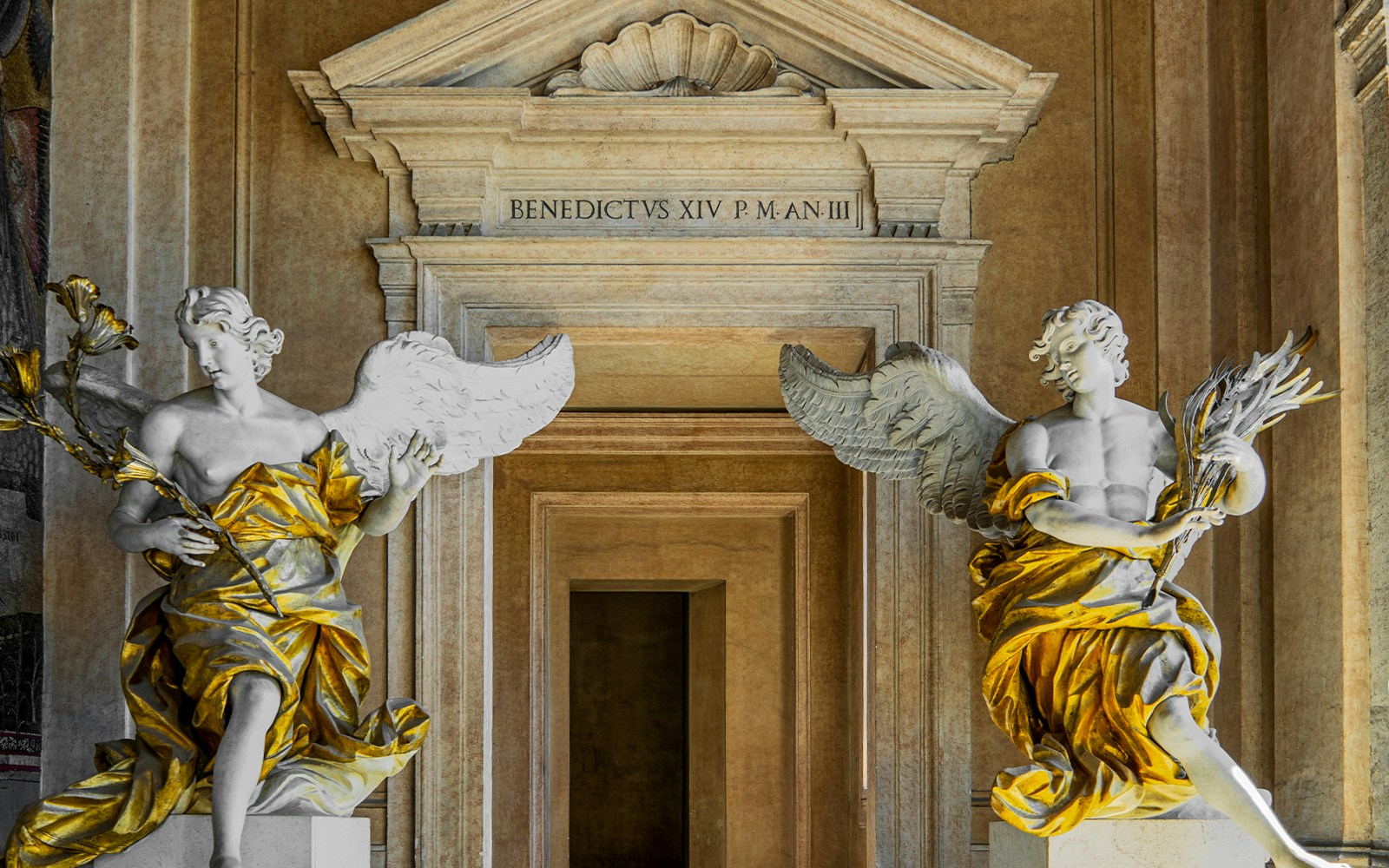
17th-18th Century: Extensive renovations under Popes Clement X and Benedict XIV, resulting in the current Baroque facade by Ferdinando Fuga.
19th-20th Century: Further restorations and archaeological discoveries, including the uncovering of Roman ruins beneath the basilica.
21st Century: The basilica continues to be a major pilgrimage site and a significant cultural and historical landmark.
Architecture of the Basilica of St. Mary Major
The Basilica of St. Mary Major is a mix of architectural styles, primarily Early Christian and Baroque. Its layout consists of a tall, wide nave flanked by aisles and ends with a semicircular apse, resembling a second-century imperial basilica. The nave’s marble columns are repurposed from an older structure that was made of Athenian marble and granite columns.
Highlights include the 16th-century coffered ceiling, gilded with Columbus's gold, the 1295 apse mosaic by Jacopo Torriti, and the 14th-century bell tower, the tallest in Rome. The 12th-century façade was redesigned in the 18th century by Ferdinando Fuga, preserving the original mosaics.
While the basilica's layout centers on a traditional plan, various additions and renovations have created a complex and layered architectural experience.
Frequently asked questions about the Basilica of St. Mary Major
The entrance that is accessible for persons with disabilities is located in Piazza di Santa Maria Maggiore, to the right of the basilica's facade. This entrance has a ramp and the horizontal pedestrian circulation is easy to navigate. There are accessible toilet facilities within the basilica. People with a disability of over 74% and a companion can enter for free without queuing. They can obtain the free tickets directly from the "special permission" counter.
During the Jubilee Year, the Catholic Church offers the faithful the opportunity to obtain a plenary indulgence. To receive the indulgence, one must make a pilgrimage to a designated Holy Door, such as the one at St. Mary Major. Participate in the sacrament of confession and receive Holy Communion. Pray for the intentions of the Pope and perform an act of charity or a good deed.
St. Mary Major is located in the busy area of Rome with several attractions within walking distance:
The Church of San Pietro in Vincoli, home to Michelangelo’s Moses.
The year leading up to the Jubilee (2024) will be marked as a Year of Prayer, encouraging the faithful to deepen their spiritual lives in preparation for the Jubilee. Pilgrims are encouraged to engage in traditional devotional practices, such as praying the Rosary or visiting specific chapels within the basilica dedicated to the Virgin Mary. Various community events and gatherings will be organized to foster spiritual growth and community engagement during the Jubilee Year.
Yes, St. Mary Major is part of the Christian Rome itinerary, which includes other significant churches such as St. Peter's Basilica, St. John Lateran, and St. Paul Outside the Walls. This route is popular among pilgrims, especially during Jubilee years.
The Basilica of St. Mary Major houses several notable tombs and chapels. Highlights include the final resting place of the renowned sculptor, Gian Lorenzo Bernini, and the stunning Borghese Chapel, famous for its miraculous icon. You'll also find the tomb of Pope Sixtus V in the basilica's Sistine Chapel (not to be confused with the Vatican's). The basilica is also a papal burial ground, with six popes laid to rest here. Other must-sees are the tomb of Pope Innocent III, adorned with beautiful religious art, the serene Chapel of the Holy Sacrament, the spiritually charged Sancta Sanctorum with its legendary Holy Stairs, and the chapels dedicated to the basilica's patron saints, John the Baptist and John the Evangelist.
Explore Rome’s oldest Marian basilica, home to radiant mosaics, ancient relics, and beautifully crafted chapels.
Everything you get: Access to Santa Maria Maggiore and see the basilica’s gilded ceiling, the apse mosaic of the Virgin Mary, chapels such as the Borghese and Pauline Chapels, sacred relics, and the Crypt of the Nativity. An audio guide explains each highlight, letting you explore at your own pace.
Why choose this: This ticket gives you access to one of Rome’s four major basilicas, allowing you to experience its architectural grandeur while discovering the stories that shaped this historic landmark.
Upgrades: Enhance your visit with access to the panoramic terrace, entry to Liberian museum areas, or a guided tour for a more immersive experience.
Inclusions
#
Access to Santa Maria Maggiore Basilica
Access to Liberian Museum (as per option selected)
Access to 360° panoramic terraces (as per option selected)
Guided tour of Santa Maria Maggiore Basilica (as per option selected)
Audio guide in 5 languages (as per option selected)
Exclusions
#
Access through the Holy Door
What to bring
Wear comfortable shoes as the experience involves walking and standing.
Wear clothing suitable for a religious site (shoulders and knees must be covered).
Bring a smartphone with your voucher ready to show at the entrance.
Bring a valid photo ID if requested at the entrance.
What’s not allowed
Bags, suitcases, and large luggage are not allowed inside the Basilica or through the reserved entrance.
Access through the Holy Door is not included with any ticket.
Pets are not permitted, except for registered service animals.
Accessibility
Wheelchair access is not available for all areas, as some sections involve stairs and narrow passages.
Additional information
While general entry to the Basilica is free, this ticket includes extras such as the audio guide, terrace access, museum access, and guided tours, depending on the option selected.
The Basilica and Museum may close certain areas without prior notice due to force majeure, celebrations, or special events. Such closures do not entitle visitors to a refund.
Audio guides are available in 5 languages: Italian, English, Spanish, French, and German.
These tickets can't be cancelled or rescheduled.
Discover Rome’s majestic Marian basilica with an expert guide, discovering ancient mosaics, sacred relics, and the Liberian Museum.
Everything you get: Explore the Papal Basilica of Santa Maria Maggiore with an official art and history expert. Enjoy entry to the Blessing Loggia, Hall of Popes, Bernini's Staircase, and the Liberian Museum. See the Miracle of the Snow mosaics and discover fascinating artefacts, all in a small group of up to 15 for a more personal experience.
Why choose this: Dive into centuries of history and art in one of Rome’s most significant basilicas, guided by a passionate expert.
Upgrades: Enhance your visit with exclusive access to the basilica’s panoramic terraces for breathtaking city views.
Inclusions
#
1-hour guided tour of Santa Maria Maggiore Basilica with skip-the-line entry
Art & historian expert English or Italian-speaking guide (as per option selected)
Access to panoramic terraces (as per option selected)
Exclusions
#
Access through the Holy Door
What to bring
Bring your smartphone voucher and present it to the reception staff at the Portico upon arrival.
Wear comfortable shoes as there is a significant amount of walking.
Ensure your knees and shoulders are covered, as entry is to a sacred area.
What’s not allowed
Food and drinks, including water, are not permitted inside the museum areas.
Flash photography is not allowed inside the basilica.
Large bags, suitcases, and oversized luggage are not allowed inside.
Children under 7 are not allowed in the dome area.
Pets are not permitted, except for registered service animals.
Accessibility
This experience is not wheelchair accessible.
Additional information
Entry to the Papal Basilica is generally free, but this guided tour provides skip-the-line access.
The management reserves the right to close parts of the basilica or museum at any time.
Access to the Papal Basilica may be restricted or unavailable during celebrations or special events.
Holy Door access is not included with your ticket.
These tickets can't be cancelled or rescheduled.
Descend beneath the grand Roman basilica, where centuries-old artwork and archaeological secrets lie preserved in silence.
Everything you get: Access to the Basilica of Santa Maria Maggiore and a guided tour of its underground archaeological areas, including the Treasure Room, ancient mosaics, unique frescoes, and historic thermal healing spaces. Admire old tilework, geometric frescoes, and the stunning coffered ceiling. The tour is led by an expert English or Italian-speaking guide and lasts about 50 minutes.
Why choose this: Discover rarely seen underground chambers and art beneath one of Rome’s most iconic basilicas, blending Romanesque, Renaissance, and Baroque architecture for a truly immersive experience.
Inclusions
#
Access to Santa Maria Maggiore Basilica
Guided tour of Underground Archaeological Area
English or Italian-speaking guide (as per option selected)
Exclusions
#
Access through the Holy Door
What to bring
Bring your smartphone voucher and show it to the Reception Staff at the Portico 15 minutes before the scheduled time.
Carry a valid photo ID if requested at the entrance.
What’s not allowed
Large bags, suitcases, and luggage are not permitted through the reserved gate.
Audio guides are not provided for this experience.
Access through the Holy Door is not included.
Children under 7 years old are not allowed on this tour.
Accessibility
This experience is not accessible for wheelchair users or people with mobility issues.
Not recommended for individuals with walking difficulties due to the physical demands of the tour.
Additional information
General entry to the basilica is free, while this ticket grants access to reserved areas and a guided experience.
The management reserves the right to close exhibition areas due to force majeure events and such closures do not entitle visitors to a refund.
These tickets can't be cancelled or rescheduled.
Tickets
Santa Maria Maggiore Basilica Entry Tickets
Explore Rome’s oldest Marian basilica, home to radiant mosaics, ancient relics, and beautifully crafted chapels.
Everything you get: Access to Santa Maria Maggiore and see the basilica’s gilded ceiling, the apse mosaic of the Virgin Mary, chapels such as the Borghese and Pauline Chapels, sacred relics, and the Crypt of the Nativity. An audio guide explains each highlight, letting you explore at your own pace.
Why choose this: This ticket gives you access to one of Rome’s four major basilicas, allowing you to experience its architectural grandeur while discovering the stories that shaped this historic landmark.
Upgrades: Enhance your visit with access to the panoramic terrace, entry to Liberian museum areas, or a guided tour for a more immersive experience.
Discover Rome’s majestic Marian basilica with an expert guide, discovering ancient mosaics, sacred relics, and the Liberian Museum.
Everything you get: Explore the Papal Basilica of Santa Maria Maggiore with an official art and history expert. Enjoy entry to the Blessing Loggia, Hall of Popes, Bernini's Staircase, and the Liberian Museum. See the Miracle of the Snow mosaics and discover fascinating artefacts, all in a small group of up to 15 for a more personal experience.
Why choose this: Dive into centuries of history and art in one of Rome’s most significant basilicas, guided by a passionate expert.
Upgrades: Enhance your visit with exclusive access to the basilica’s panoramic terraces for breathtaking city views.
Santa Maria Maggiore Basilica Underground Guided Tour
Descend beneath the grand Roman basilica, where centuries-old artwork and archaeological secrets lie preserved in silence.
Everything you get: Access to the Basilica of Santa Maria Maggiore and a guided tour of its underground archaeological areas, including the Treasure Room, ancient mosaics, unique frescoes, and historic thermal healing spaces. Admire old tilework, geometric frescoes, and the stunning coffered ceiling. The tour is led by an expert English or Italian-speaking guide and lasts about 50 minutes.
Why choose this: Discover rarely seen underground chambers and art beneath one of Rome’s most iconic basilicas, blending Romanesque, Renaissance, and Baroque architecture for a truly immersive experience.