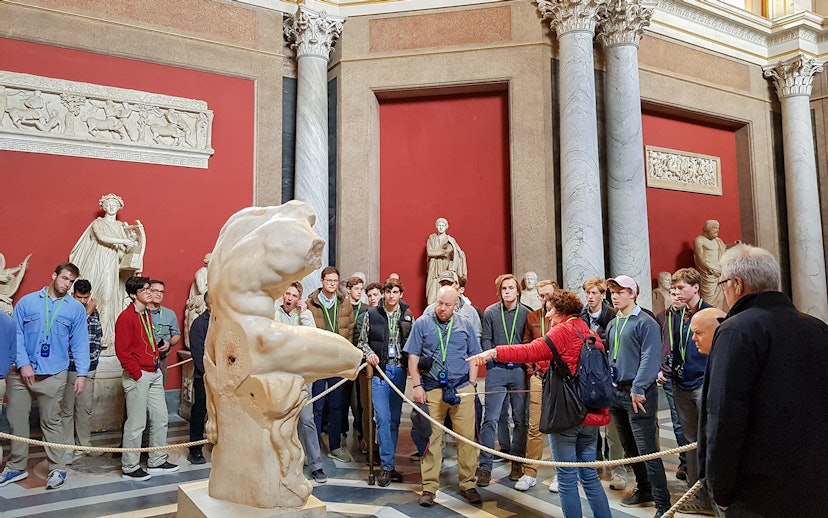
Book the first weekday entry slot. Guided groups stack up from about 10:30am, especially around Laocoön and Apollo Belvedere, and the rooms feel tighter than they look. If you want clear sightlines and time to circle the sculptures, don’t aim for late morning.
Pio Clementino Museum tickets
Included with Vatican Museums tickets
Timings
RECOMMENDED DURATION
3 hours

Top things to do in Rome
Overview
- Access: Included in all Vatican Museums tickets
- Separate ticket: Not required
- When you'll see it: Early to midway on the main route
- Visit duration: 20 to 30 min self-guided / 30 to 40 min with guide
- Best time: First entry slot on a weekday, before groups reach the sculpture courts
- Restrictions: No flash. Photography otherwise allowed.

The Pio Clementino Museum is included with all Vatican Museums tickets. No separate ticket is needed. You’ll reach it in the early part of the standard museum route, before the long gallery sequence and well before the Sistine Chapel, and you don’t need a separate checkpoint to enter it. Book a skip-the-line ticket or a guided tour so you reach these sculpture rooms before the late-morning group waves build.
How to best experience Pio Clementino Museum

Best time to visit

How long to spend
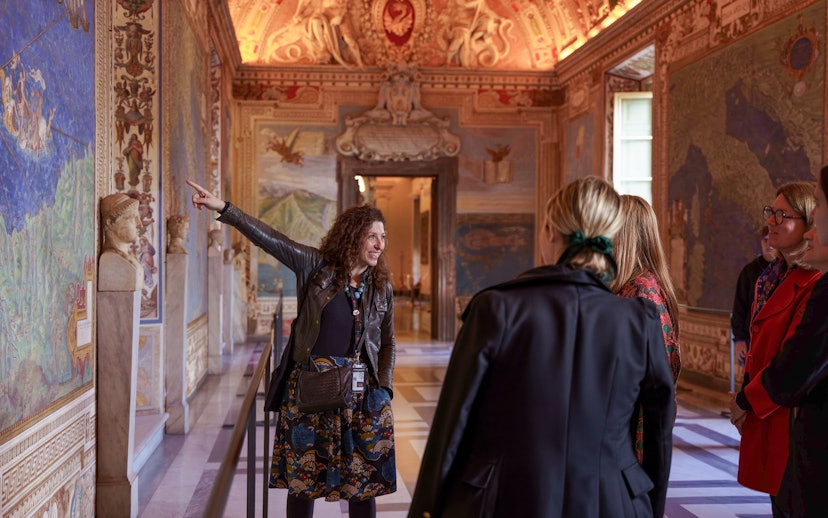
Self-guided, allow 25–35 minutes. With a guide, 35–45 minutes works better because these rooms reward explanation, not speed. If you give them only 10 minutes, you’ll register marble, not the differences between Roman copies, restorations, and ancient originals.

Where it fits in your itinerary
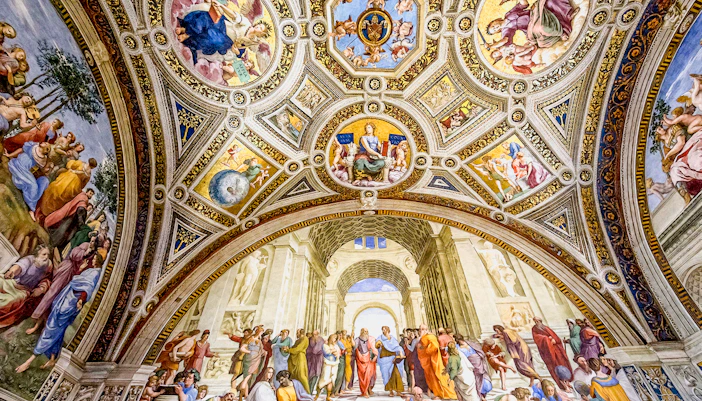
You’ll reach these galleries early, usually within the first 30–45 minutes after entry, before the long march toward the Raphael Rooms and Sistine Chapel. Use that to your advantage: stop here while your attention is fresh, rather than saving energy for later.

Crowd patterns
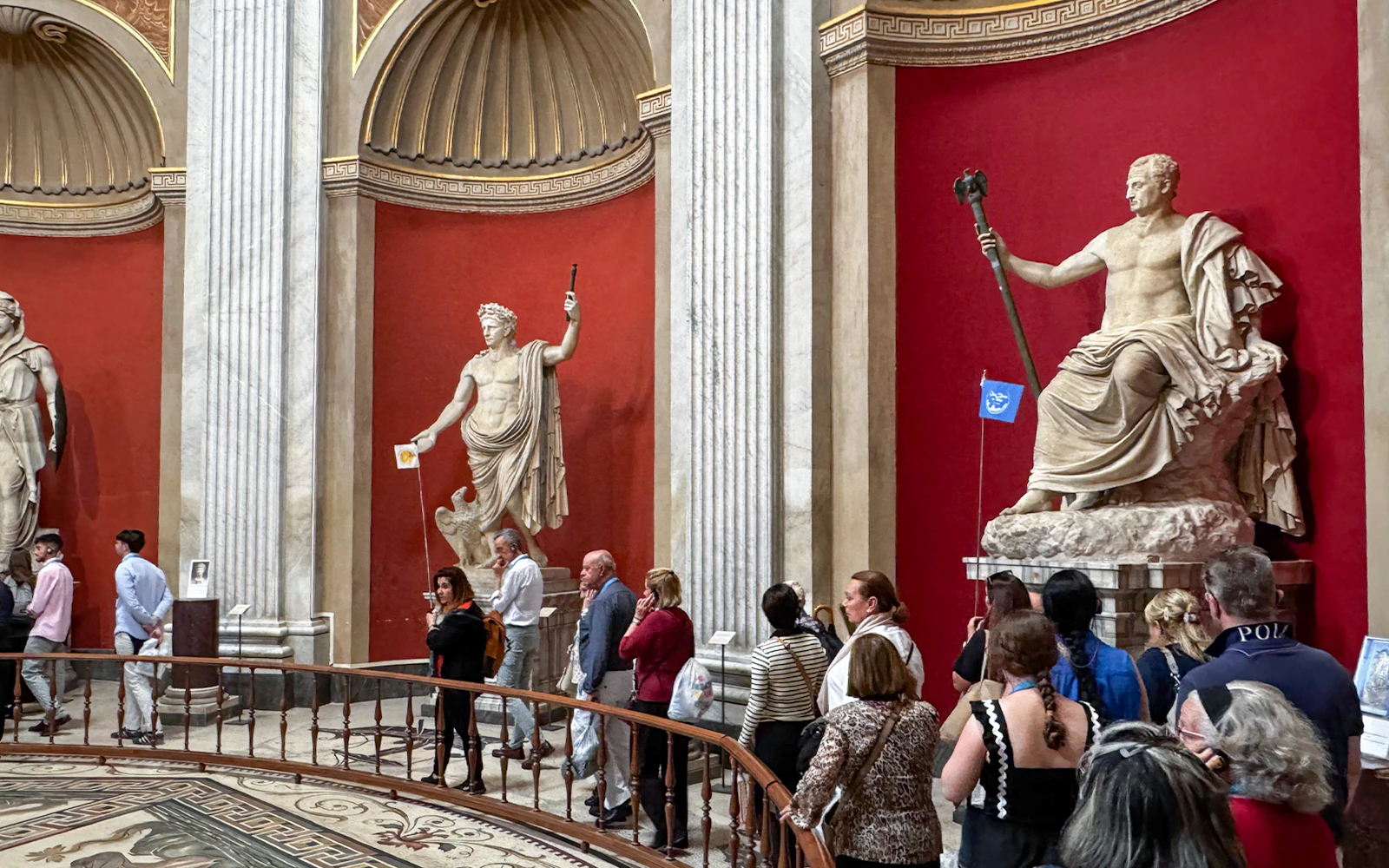
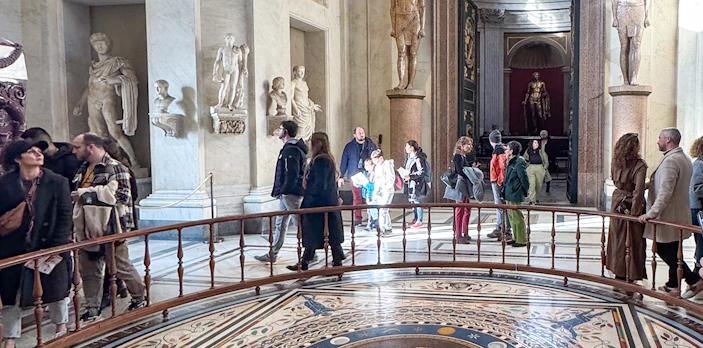
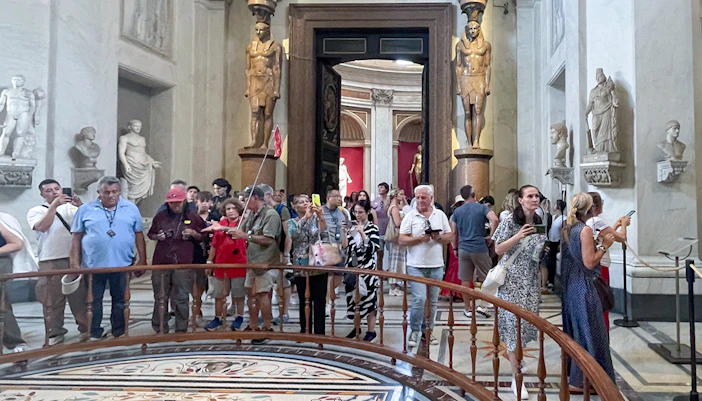
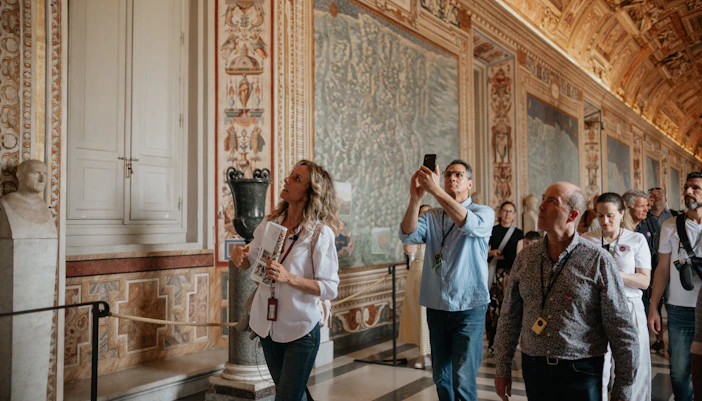
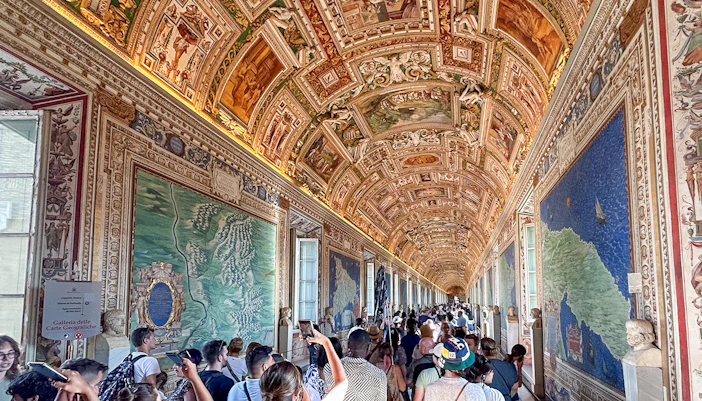
Bottlenecks form around the Octagonal Courtyard, the Round Hall, and any room where a guide stops a group in a doorway. The sharpest build-up is roughly 11am–2pm. Earlier slots let you step back and view statues in the round instead of through shoulders.

What to prioritize if time is short
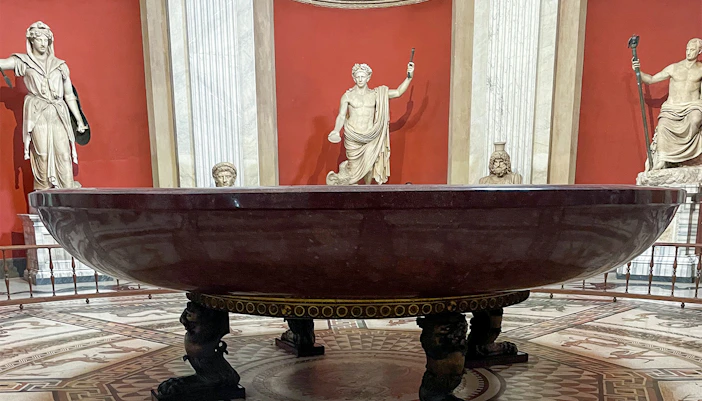
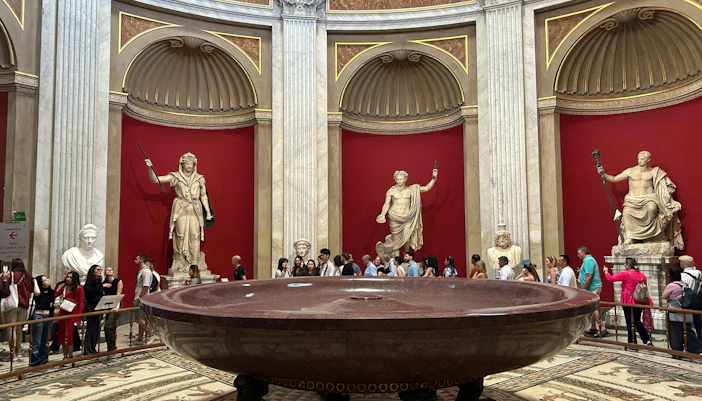
Start with Laocoön and His Sons, Apollo Belvedere, and the Round Hall’s enormous porphyry basin. These three stops explain why the museum matters. If time is tight, trim later decorative galleries, not the sculpture rooms that shaped the Vatican’s collection.

Common mistakes to avoid
Most visitors read the label, glance once, and move on. Walk around each sculpture and look from multiple angles; these works were made to be read in the round. Also, don’t rush straight to the Gallery of Maps and miss the side rooms entirely.
Best tickets to experience Pio Clementino Museum
| Ticket type | Why choose it |
|---|---|
Skip-the-line | Reach the sculpture rooms before queues and tour waves drain time and patience. |
Guided tour | Turns Greek and Roman marble into a story you can actually follow. |
Early morning tour | Gives you the calmest view of key statues before doorway bottlenecks form. |
Why it’s worth seeing
What makes these galleries irreplaceable within the Vatican Museums is simple: this is where the Vatican’s identity as a collector of classical sculpture becomes concrete, room by room. Many visitors don’t realize that the 1506 discovery of Laocoön and His Sons helped start the chain of acquisitions that eventually defined the museums. Move through these spaces in order and the collection reads less like storage, more like a carefully staged argument about beauty, power, and ancient Rome.

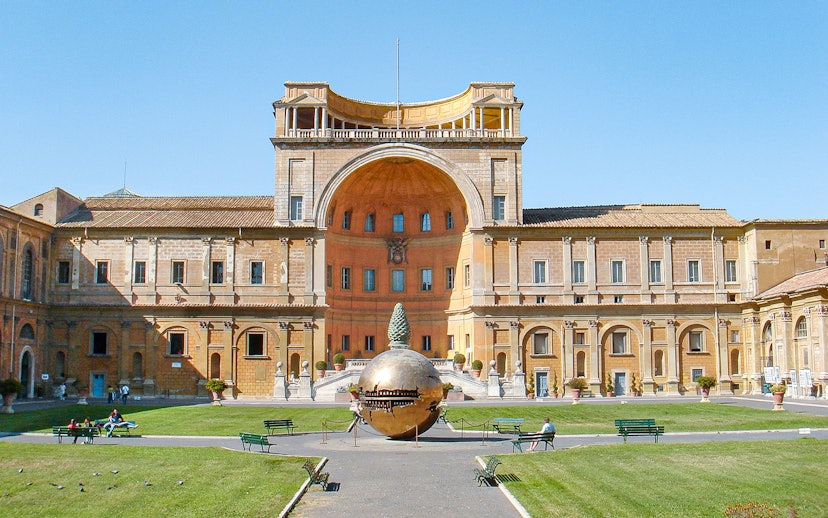
Octagonal Courtyard
This is the room most first-time visitors remember. Laocoön and His Sons and Apollo Belvedere are displayed here with enough space to circle them, which matters because both works change dramatically as you move. The courtyard sets the tone for the whole museum: classical sculpture is not background decoration here, it is the reason these galleries exist.

Round Hall
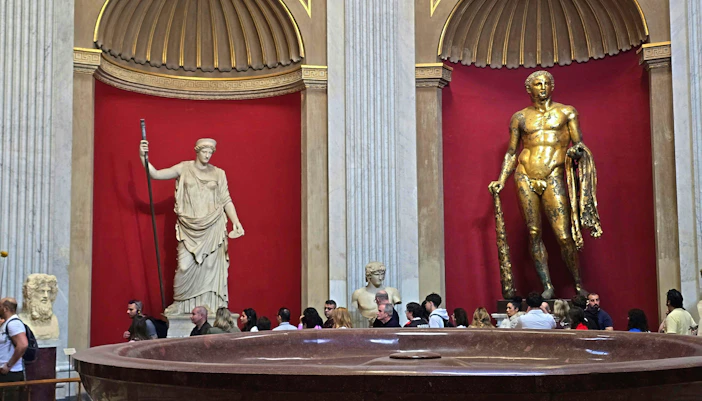
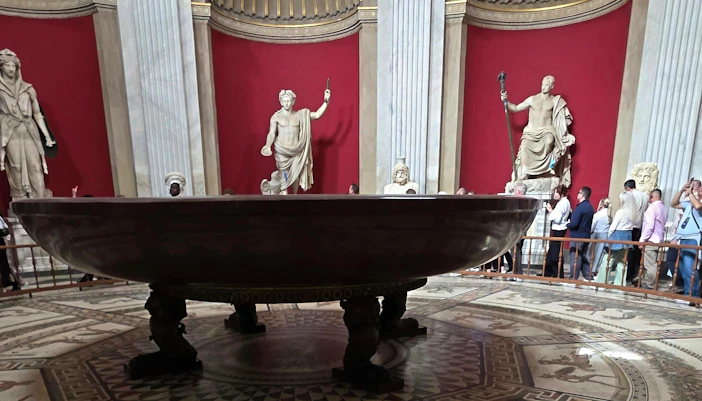
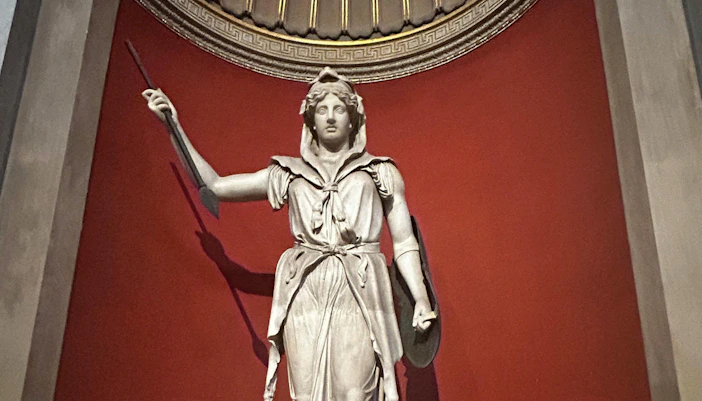
The Round Hall slows the pace down. Its scale, domed ceiling, ancient floor mosaics, and massive red porphyry basin make the museum feel less like a corridor of objects and more like a reconstructed Roman interior. After the courtyard’s famous single works, this room teaches you to read the setting itself as part of the experience.

Hall of the Muses and nearby galleries
The inner halls deepen the argument. Here, the museum shifts from a few headline statues to a denser presentation of busts, torsos, and idealized bodies that Renaissance artists studied obsessively. If you’ve only looked for famous names so far, this is the point where the collection starts explaining how classical form shaped later Vatican art.
Know before you go
- Entry system: Access is by timed Vatican Museums slot, not open-ended admission.
- Arrival: Reach the entrance 15–30 minutes before your booked time; late arrivals may be refused.
- Route timing: Most visitors reach these galleries 30–45 minutes after entering the museums.
- Closures: Schedules and gallery access can change for institutional, papal, or Jubilee events.
- Official source: Check the Vatican Museums website before visiting for the latest hours and closures.
- Address: Viale Vaticano, 00165 Vatican City (Google Maps: ‘Vatican Museums entrance’).
- Nearest metro: Ottaviano on Line A, about a 10-minute walk; Cipro is a similar walk.
- Entry point: Use the Vatican Museums entrance on Viale Vaticano, not St. Peter’s Square.
- Position in route: The Pio Clementino galleries appear early in the standard museum circuit.
- Direct access: No; you must enter through the museums and follow the visitor flow.
- Wheelchair access: The Vatican Museums provide an accessible route, and these galleries are generally included on it.
- Wheelchair hire: Free wheelchairs are available from the cloakroom, subject to availability.
- Assistance: Ask at Reception or the Special Permits Desk for the adapted route map on arrival.
- Reduced-mobility policy: Visitors with certified disability over 74% and one companion may receive free entry in person.
- Guided tour note: Some guided tour products are not wheelchair accessible even when the museum route itself is.
- Required: Shoulders, knees, and back must be covered to enter the Vatican Museums route.
- Not permitted: Sleeveless tops, short shorts, miniskirts, and very revealing clothing.
- Applies to: All guests, because the visit route continues toward sacred spaces, including the Sistine Chapel.
- Enforcement: Staff can refuse entry for non-compliant clothing.
- Preparedness: Bring your own extra layer if your outfit is borderline.
- Photography: Generally allowed in the galleries without flash; photography inside the Sistine Chapel is prohibited.
- Equipment: Tripods, large filming gear, and similar bulky equipment are not allowed.
- Bags: Large bags and suitcases must be left at the cloakroom before entry.
- Conduct: Don’t touch sculptures, lean on barriers, or block room entrances for long stops.
- Food and drink: Not permitted inside the galleries.
Frequently asked questions about Pio Clementino Museum
Yes. Entry to the Pio Clementino Museum is included with every valid Vatican Museums ticket. No separate ticket exists.
No. It has no independent entrance and sits on the Vatican Museums route. You enter through the main museums entrance on Viale Vaticano.
You’ll usually reach it early in the visit. Most visitors arrive within 30–45 minutes of entering the museums.
Plan 25–35 minutes self-guided, or 35–45 minutes with a guide. Less than that turns it into a walk-through.
Yes. It is included in Vatican Museums guided tours. A guide helps you connect Laocoön, Apollo Belvedere, and later Renaissance art.
Yes. Prioritize Laocoön, Apollo Belvedere, and the Round Hall first. Those rooms give you the clearest sense of why these galleries matter.
Yes, generally in the galleries. Flash, tripods, and photography inside the Sistine Chapel are not allowed.
Yes, via the Vatican Museums’ accessible route. Ask staff at entry for elevators and the adapted path.